'%3e%3cpath%20fill-rule='evenodd'%20clip-rule='evenodd'%20d='M72.7386%2031.9427H70.5078V34.2699H73.5513L74.8841%2037.6969H78.3056L72.2835%2022.6738H70.4996V25.6665L72.7386%2031.9427ZM70.5078%2031.9427H68.2688L70.4265%2025.6745H70.4996V22.6818H68.7889L62.8359%2037.7049H66.038L67.3748%2034.2779H70.4996L70.5078%2031.9427Z'%20fill='%23005BAA'/%3e%3cpath%20fill-rule='evenodd'%20clip-rule='evenodd'%20d='M89.5501%2025.455C88.5675%2025.0218%2087.5025%2024.7977%2086.4253%2024.7975C85.385%2024.7975%2083.9872%2025.2319%2083.9872%2026.9095C83.9872%2029.4678%2090.7529%2028.372%2090.7529%2033.4766C90.7529%2036.7602%2088.071%2037.9995%2084.9502%2037.9995C83.3248%2037.9995%2082.569%2037.7803%2081.0046%2037.4177L81.3053%2034.7199C82.3888%2035.2638%2083.5831%2035.562%2084.7999%2035.5926C85.9905%2035.5926%2087.5508%2035.0068%2087.5508%2033.6998C87.5508%2030.7749%2080.7852%2032.0181%2080.7852%2026.9852C80.7852%2023.6299%2083.4671%2022.3906%2086.1408%2022.3906C87.4021%2022.395%2088.655%2022.5912%2089.8548%2022.9724L89.5501%2025.455Z'%20fill='%23005BAA'/%3e%3cpath%20fill-rule='evenodd'%20clip-rule='evenodd'%20d='M97.584%2025.0925H93.1914V22.6816H105.093V25.0925H100.709V37.7047H97.584V25.0925Z'%20fill='%23005BAA'/%3e%3cpath%20fill-rule='evenodd'%20clip-rule='evenodd'%20d='M113.344%2025.105C114.466%2025.2445%20115.429%2025.6829%20115.429%2026.9979C115.429%2028.4563%20114.466%2028.8947%20113.344%2029.0421V31.6682C113.795%2031.9551%20114.015%2032.3217%20114.315%2033.0549L116.176%2037.7172H119.598L117.139%2031.8794C116.847%2031.1461%20116.327%2030.3452%20115.514%2030.2854C116.384%2030.1857%20117.185%2029.7724%20117.762%2029.1258C118.339%2028.4793%20118.65%2027.6456%20118.635%2026.7867C118.635%2023.3597%20116.034%2022.8456%20113.352%2022.7021L113.344%2025.105ZM111.19%2025.105H113.344V22.7141H108.086V37.7372H111.207V31.5088H112.149C112.553%2031.4694%20112.96%2031.5198%20113.34%2031.6562V29.0302C112.946%2029.0878%20112.547%2029.1079%20112.149%2029.0899H111.186L111.19%2025.105Z'%20fill='%23005BAA'/%3e%3cpath%20fill-rule='evenodd'%20clip-rule='evenodd'%20d='M131.422%2031.9427H129.191V34.2699H132.32L133.584%2037.6969H137.001L130.979%2022.6738H129.191V25.6665L131.422%2031.9427ZM129.191%2031.9427H126.964L129.191%2025.6745V22.6818H127.484L121.531%2037.7049H124.75L126.082%2034.2779H129.207L129.191%2031.9427Z'%20fill='%23005BAA'/%3e%3cpath%20fill-rule='evenodd'%20clip-rule='evenodd'%20d='M80.9241%206.77433C77.1329%207.06523%2069.7658%208.15709%2063.7437%209.16527C57.7907%2010.1854%2054.8041%2010.9186%2052.2888%2011.5004C45.6694%2013.0346%2035.6285%2015.8838%2030.2729%2017.4778C25.5999%2019.0359%2013.1616%2024.0648%2012.7918%2023.9971C12.6415%2023.9971%2012.1904%2023.5587%2012.8609%2023.1204C11.6012%2023.9971%2031.0124%207.14492%2062.8416%202.91695V0H0V33.4732C19.334%2025.8182%2040.6104%2022.8255%2062.8457%2022.8255V14.7441L63.3699%2014.5967C76.0885%209.93037%2090.8918%208.02957%20114.911%205.55097V4.75399C112.904%204.75399%2098.0272%204.96917%2081.2207%206.79425L80.9241%206.77433Z'%20fill='%23005BAA'/%3e%3cpath%20fill-rule='evenodd'%20clip-rule='evenodd'%20d='M114.912%204.29948C103.641%203.56019%2092.3313%203.60946%2081.0676%204.44692C75.1959%204.88526%2068.9463%205.76194%2063.1477%206.71034C50.7947%208.82234%2040.5385%2011.3767%2040.5385%2011.3767C40.5385%2011.3767%2039.7908%2011.3767%2040.4613%2010.9423C41.5788%2010.2848%2050.6484%206.272%2063.1477%203.86512C65.8269%203.35506%2068.6523%202.91672%2071.6241%202.55011C72.0711%202.55011%2071.6241%202.04004%2071.6241%202.04004C68.7268%202.25921%2065.8255%202.40665%2063.0908%202.76928C51.3864%204.41589%2040.0139%207.83588%2029.3802%2012.9069C28.9332%2013.13%2030.5668%2012.1776%2021.046%2017.358C21.046%2017.358%2015.0971%2021.2233%2014.6542%2021.6617C14.0569%2022.2475%2019.5588%2019.8366%2023.4272%2018.4499C26.999%2017.2145%2036.6701%2014.5128%2038.9009%2013.8553C40.4613%2013.4209%2045.9633%2012.2613%2051.6887%2011.1575C57.0484%2010.0616%2062.1765%209.4121%2062.4772%209.34037H62.847C62.847%209.34037%2068.7268%208.45971%2069.9093%208.24054C71.7013%207.87393%2081.4455%206.71034%2081.5187%206.71034C98.3292%204.88526%20115.209%204.7418%20114.912%204.7418V4.29948Z'%20fill='%2395B6DF'/%3e%3c/g%3e%3cdefs%3e%3cclipPath%20id='clip0_118_10024'%3e%3crect%20width='137'%20height='38'%20fill='white'/%3e%3c/clipPath%3e%3c/defs%3e%3c/svg%3e)






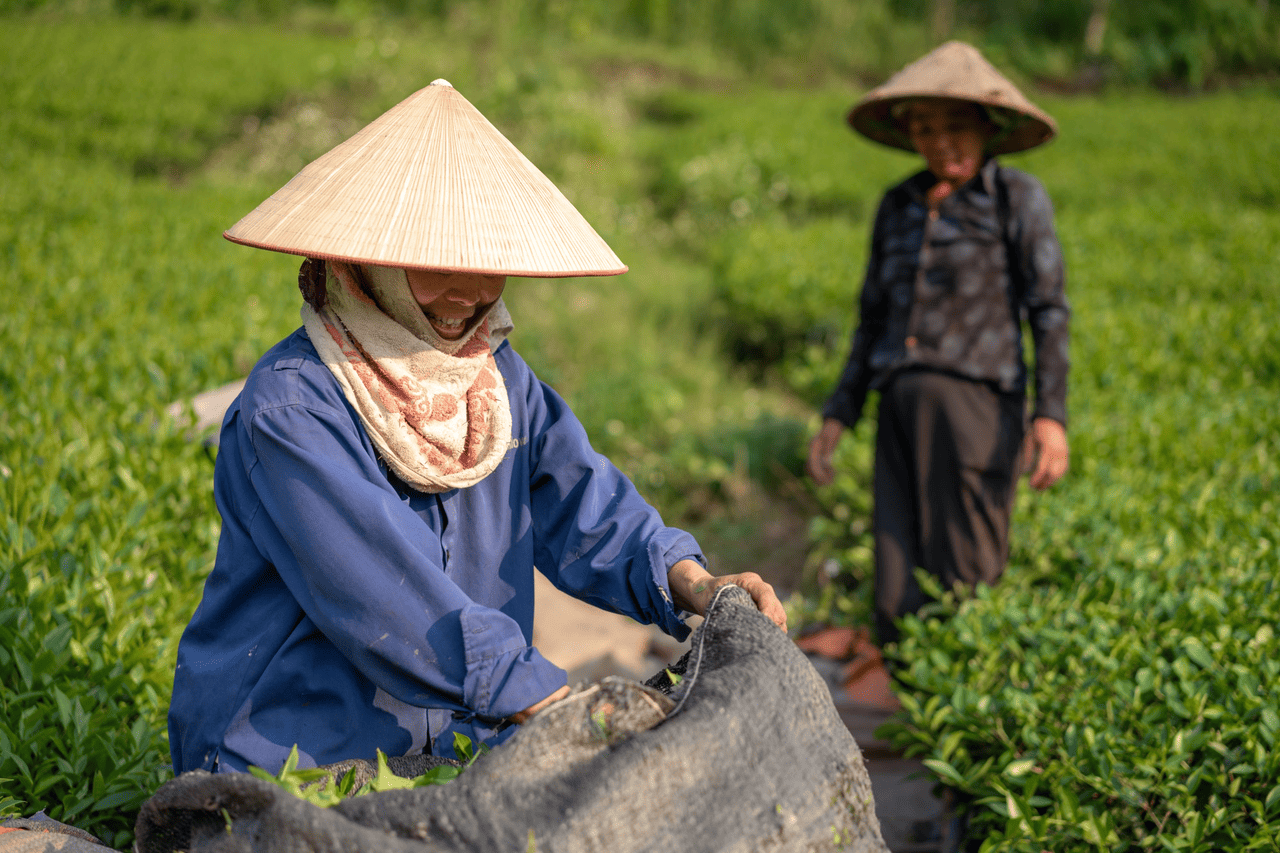
Rural community empowerment is central to national progress. Explore its definition, goals, and Astra's tangible contributions toward making it a reality.
Public Contribution
5 mins read
0
Bagikan:
Villages are essential to Indonesia's national development. Their independence and well-being directly influence the country's progress, making rural community empowerment a shared priority.
Coordinated efforts across sectors are necessary to secure a sustainable future for rural communities and their villages.
To gain a better understanding of the specific steps needed to achieve this and how Astra is contributing to the effort, let's take a look at the following discussion.
ALSO READ: Understanding Independent Villages: A Pillar Toward Sustainable Communities
Under Law No. 6 of 2014 on Villages, Article 1, Paragraph 12, the empowerment of village communities is an effort to develop the independence and well-being of the community by enhancing knowledge, attitudes, skills, behavior, capabilities, and awareness, as well as utilizing resources through the establishment of policies, programs, activities, and guidance that align with the nature of the issues and the priority needs of the village community.
In essence, rural community empowerment builds self-reliant, sustainable villages by maximizing resources to achieve self-sufficiency and progress.
This program focuses on key sectors, including governance, institutions, health, the economy, technology, and education.
Furthermore, empowerment is not limited to contributions from external parties, such as central and local governments.
Rather than merely being passive and dependent beneficiaries, the village community also becomes an active and independent actor in managing authority, solving problems, and contributing to the village's overall development.
The primary goal of rural community empowerment is to improve the quality of life in rural areas.
This process aims to help rural communities overcome underdevelopment, inequality, and powerlessness.
In broad terms, this aspiration can be achieved through the following strategies:
1. Facilitating and supporting rural communities in developing their potential and capacity.
2. Ensuring communities have space to participate and collaborate in developing their villages.
3. Embracing change while preserving local wisdom and cultural heritage.
4. Raising the standard of living and income of rural communities.
5. Providing easier access to education, healthcare, and other essential services.
6. Protecting rural communities from risks and conflicts that undermine their progress, such as unequal competition and exploitation.
7. Strengthening village institutions.
While rural community empowerment emphasizes self-reliance, that does not mean villages must go it alone. In practice, positive change is achieved far more effectively through cooperation, collaboration, and shared commitment across multiple stakeholders.
Beyond local initiatives, here are the key sources and agents of rural community empowerment.
As mandated by law, the central government, regional governments, and village administrations are all obligated to empower their communities by designing programs and issuing policies that serve the interests of rural people.
NGOs work directly with rural communities to provide mentorship, training, and impactful activities across sectors.
Indonesian universities follow the Tri Dharma framework, which includes education, research, and community service. These pillars support rural community empowerment.
The private sector contributes to rural community empowerment through Corporate Social Responsibility (CSR) programs, as demonstrated by Astra.
As a corporation built around sustainability, Astra is guided by its vision of Sejahtera Bersama Bangsa (Prosper with the Nation) and is committed to sustainability and public contribution.
Through this roadmap, Astra strengthens its commitment to delivering sustainable, measurable, and impactful social contributions, especially in rural communities.
This commitment is realized through four pillars, including Astra untuk Indonesia Sehat, Astra untuk Indonesia Cerdas, Astra untuk Indonesia Hijau, and Astra untuk Indonesia Kreatif. Each aligns with the goals of rural community empowerment.
These pillars are implemented through programs such as Desa Sejahtera Astra (DSA) and Kampung Berseri Astra (KBA).
Rural community empowerment covers all key sectors, including village governance and education. The following provides a detailed overview.
This sector builds the capacity of village governance bodies, such as village heads, officials, and the Village Consultative Body (BPD), through training and coordinated program implementation.
The goal is to enhance village government performance to better lead and advance the community.
This sector strengthens institutions by providing training, programs, and necessary facilities and infrastructure.
Well-equipped institutions are expected to perform better and support village governance in driving development.
This sector builds a resilient rural economy by supporting SMEs, home industries, village-owned enterprises (BUMDes), farmer groups, markets, and other economic drivers.
Empowerment programs include workshops, access to capital, support for production equipment, and other initiatives.
Through Desa Sejahtera Astra, Astra supports rural economic growth by facilitating collaboration with international entrepreneurs to export local products.
For example, DSA Blitar exported 3,500 Kendang Djembe crafts, with the collaboration valued at IDR 47.6 billion.
To keep pace with a rapidly changing world, this sector aims to build a digitally literate rural population through a range of training and development programs.
The goal is for rural communities to become competitive and capable, enabling productive work and access to information in the digital age.
Health is essential to empowerment. Rural communities need adequate healthcare facilities and health education programs.
These efforts not only improve quality of life but also promote a culture of healthy living.
Another equally important focus is educating the public, both students and teachers, through quality education to foster a competent, golden generation.
Beyond teaching and training, this sector encompasses the provision of facilities and infrastructure, scholarships and financial support, and the fulfillment of other educational rights.
ALSO READ: Introducing the Creative Village Program: Innovation for the Future of Communities
Rural community empowerment flourishes when all stakeholders work together.
Through programs like Desa Sejahtera Astra (DSA), Kampung Berseri Astra (KBA), and other initiatives, Astra demonstrates its commitment to maximizing village potential.
Guided by its vision of Sejahtera Bersama Bangsa (Prospering Together with the Nation), Astra drives positive change for healthy, educated, productive, and sustainable rural communities.
To explore more of Astra's social contributions, visit the Astra Sustainability Report.


Be part of our enthusiastic community that is interconnected in the vision of a sustainable future.