Globally, environmentally friendly innovations are advancing rapidly to address the climate crisis and maintain ecosystem balance. Green technology has emerged as both a solution for environmental health and a sustainable development strategy that drives economic growth.
Businesses, including Astra, are increasingly focusing on green technology to strengthen their Environmental, Social, and Governance (ESG) commitments and create lasting impact.
If you'd like to learn more about green technology and Astra's strategy for driving that innovation, read on through the article below.
ALSO READ: Waste to Energy: Astra's Strategy to Realize a Circular Economy
What Is Green Technology?
Green technology involves developing and using innovations that minimize the negative impacts of human activity on the environment and society. It includes products, services, and processes that reduce greenhouse gas emissions, improve energy efficiency, and promote sustainable resource use.
Also known as greentech, it leverages scientific and engineering advances to address climate challenges. Innovations such as renewable energy, electric vehicles, and modern waste management systems all aim to keep the earth livable for current and future generations.
Green technology also involves creating systems that are efficient, equitable, and socially responsible. This foundation supports the transition to a low-carbon economy and sustainable development.
The Core Principles of Green Technology
Green technology is based on long-term sustainability, ensuring solutions meet current needs without compromising the ability of future generations to meet theirs.
Another core principle is energy efficiency and the use of renewable energy. Green technology aims to reduce energy and resource consumption while minimizing emissions and waste.
Green technology also supports the circular economy by considering the entire life cycle of products and services, from raw material extraction and production to distribution and end-of-life management.
The Benefits of Green Technology
Green technology offers significant benefits for the environment, economy, and society, including the following:
- Reducing carbon emissions. By using renewable energy sources such as solar and wind instead of fossil fuels, green technology lowers greenhouse gas emissions.
- Improving energy efficiency. Green technology enables more economical and environmentally friendly energy use across households and industries without reducing productivity.
- Curbing environmental pollution. Green technology helps minimize air and water pollution, protecting communities from health risks.
- Fueling innovation. Investment in green technology drives eco-friendly innovations that address everyday needs.
- Preserving natural resources (SDA). Green technology promotes sustainable material use and innovation, helping conserve natural resources, including flora, fauna, and their habitats.
- Supporting sustainable development. Green technology generates economic opportunities, including new jobs in the green sector.
- Saving money. Switching to renewable energy reduces long-term energy costs.
- Strengthening energy resilience. Reduced dependence on limited resources through green technology increases a country's energy self-reliance.
- Boosting company reputation. Companies that prioritize green technology can enhance their image among environmentally conscious stakeholders.
Challenges in Adopting Green Technology
Despite its benefits, adopting green technology presents several challenges, including the following:
- Relatively high upfront costs. Green technology often requires a higher initial investment than conventional alternatives, which can be challenging for some companies and communities.
- Limited supporting infrastructure. Many regions still depend on fossil fuel-based infrastructure, making the transition to green technology time-consuming and resource-intensive.
- Technology readiness and maturity. Some green technologies are still in development and not fully optimized for large-scale, efficient, and cost-effective use.
- Inconsistent regulations and policies. Variations in environmental standards and policies across regions can hinder widespread adoption of green technology.
- Awareness and behavior change. Encouraging the adoption of eco-friendly solutions requires significant shifts in mindsets and lifestyles.
Types of Green Technology
Green technology is applied across various sectors, including the following:
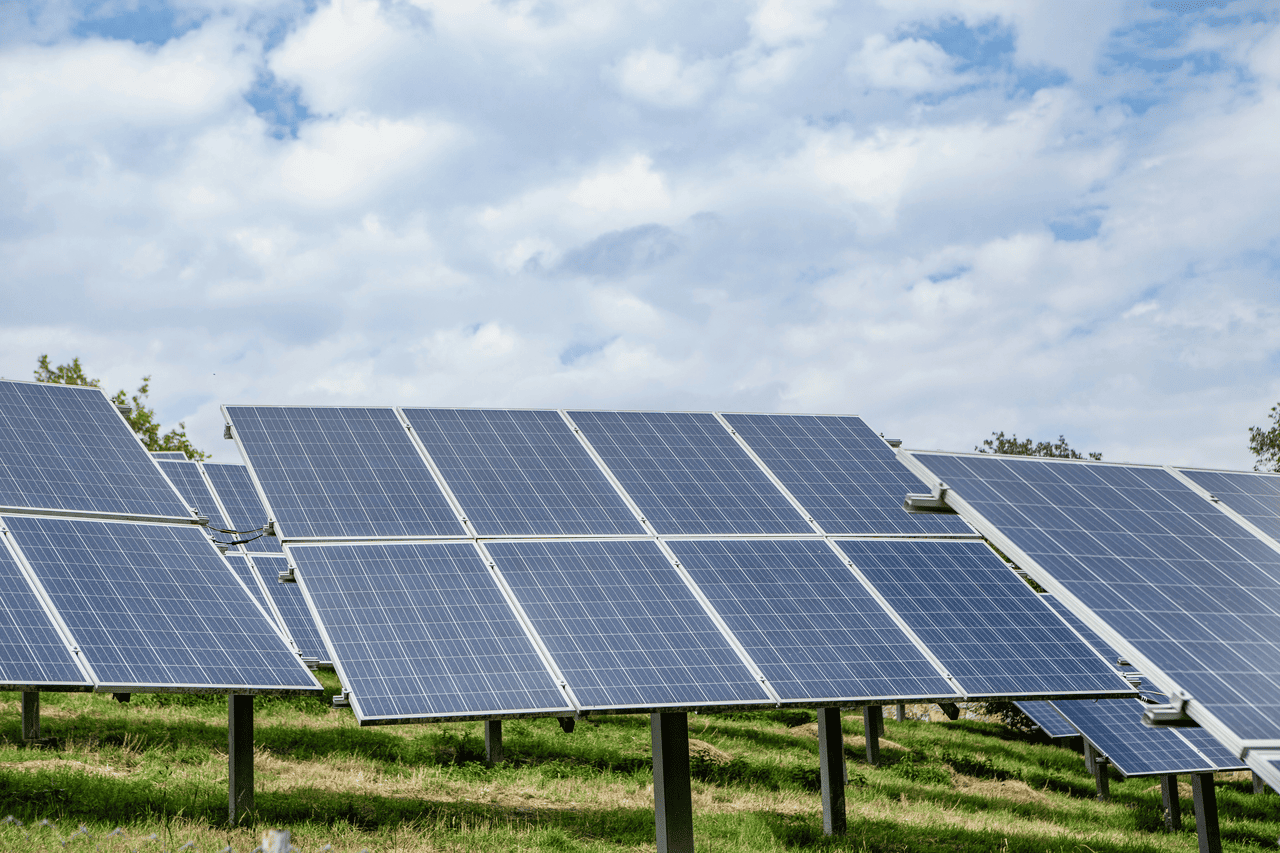
- Renewable energy. Green technology is widely applied through renewable energy sources such as solar, wind, water, geothermal, and biomass to reduce dependence on fossil fuels.
- Energy efficiency. Energy-saving devices, LED lighting, and smart energy management systems help reduce energy consumption without compromising performance or productivity.
- Waste management and recycling. Green technology enables modern waste management, including recycling and waste-to-energy (WTE), to reduce waste and maximize resource reuse.
- Water and wastewater treatment. Green technology includes water purification, rainwater harvesting, and wastewater treatment systems, enabling safe and efficient water reuse.
- Eco-friendly transportation. Electric vehicles, biofuels, and low-emission public transport are examples of green technologies in mobility that help reduce air pollution.
- Smart agriculture. Precision agriculture uses water-saving irrigation, sensors, digital data, hydroponics, and vertical farming to maximize yields and minimize environmental impact.
- Sustainable buildings and construction. Green buildings use eco-friendly materials, energy-efficient designs, and natural ventilation to lower carbon footprints.
Astra's Steps in Driving Green Technology Innovation
As part of its Environmental, Social, and Governance (ESG) commitment, Astra actively encourages the use of green technology in its business operations and in the development of long-term solutions.
Through the Astra 2030 Sustainability Aspirations framework, Astra integrates environmentally friendly innovation into its green technology initiatives, as demonstrated by the following steps:
- Using renewable energy in group operations. In line with the Astra Net Zero 2050 target, Astra maximizes the use of biomass, biofuel, solar panels, and geothermal power plants.
- Developing circular economy and waste management solutions. Astra implements water and waste management innovations, including Zero Liquid Discharge, Astra Recycling Outlets (Gerai Daur Ulang), and a 6R program (Refine, Reduce, Reuse, Recycle, Recovery, and Retrieve-to-energy).
- Nature-based solutions initiatives. To reduce greenhouse gas emissions, Astra launched the Astra Sustainable Forest program, aiming to plant 3 million trees.
- Investing in low-emission transportation. Astra supports the transition to clean transportation by investing in Indonesia's hybrid-vehicle ecosystem.
- Building green buildings. Astra promotes the construction and management of buildings that prioritize energy efficiency, water conservation, and user comfort, as seen in Menara Astra.
ALSO READ: Getting to Know How to Save Energy in the Modern Industrial Sector
Astra's Green Technology for a Sustainable Future
Implementing green technology increases opportunities to reduce climate change impacts and foster inclusive economic growth. As a result, green technology is essential for a more sustainable future.
Astra consistently supports the development and adoption of green technology as part of its ESG commitment. For more information on Astra's strategy, targets, and achievements, please refer to the Astra Sustainability Report.
'%3e%3cpath%20fill-rule='evenodd'%20clip-rule='evenodd'%20d='M72.7386%2031.9427H70.5078V34.2699H73.5513L74.8841%2037.6969H78.3056L72.2835%2022.6738H70.4996V25.6665L72.7386%2031.9427ZM70.5078%2031.9427H68.2688L70.4265%2025.6745H70.4996V22.6818H68.7889L62.8359%2037.7049H66.038L67.3748%2034.2779H70.4996L70.5078%2031.9427Z'%20fill='%23005BAA'/%3e%3cpath%20fill-rule='evenodd'%20clip-rule='evenodd'%20d='M89.5501%2025.455C88.5675%2025.0218%2087.5025%2024.7977%2086.4253%2024.7975C85.385%2024.7975%2083.9872%2025.2319%2083.9872%2026.9095C83.9872%2029.4678%2090.7529%2028.372%2090.7529%2033.4766C90.7529%2036.7602%2088.071%2037.9995%2084.9502%2037.9995C83.3248%2037.9995%2082.569%2037.7803%2081.0046%2037.4177L81.3053%2034.7199C82.3888%2035.2638%2083.5831%2035.562%2084.7999%2035.5926C85.9905%2035.5926%2087.5508%2035.0068%2087.5508%2033.6998C87.5508%2030.7749%2080.7852%2032.0181%2080.7852%2026.9852C80.7852%2023.6299%2083.4671%2022.3906%2086.1408%2022.3906C87.4021%2022.395%2088.655%2022.5912%2089.8548%2022.9724L89.5501%2025.455Z'%20fill='%23005BAA'/%3e%3cpath%20fill-rule='evenodd'%20clip-rule='evenodd'%20d='M97.584%2025.0925H93.1914V22.6816H105.093V25.0925H100.709V37.7047H97.584V25.0925Z'%20fill='%23005BAA'/%3e%3cpath%20fill-rule='evenodd'%20clip-rule='evenodd'%20d='M113.344%2025.105C114.466%2025.2445%20115.429%2025.6829%20115.429%2026.9979C115.429%2028.4563%20114.466%2028.8947%20113.344%2029.0421V31.6682C113.795%2031.9551%20114.015%2032.3217%20114.315%2033.0549L116.176%2037.7172H119.598L117.139%2031.8794C116.847%2031.1461%20116.327%2030.3452%20115.514%2030.2854C116.384%2030.1857%20117.185%2029.7724%20117.762%2029.1258C118.339%2028.4793%20118.65%2027.6456%20118.635%2026.7867C118.635%2023.3597%20116.034%2022.8456%20113.352%2022.7021L113.344%2025.105ZM111.19%2025.105H113.344V22.7141H108.086V37.7372H111.207V31.5088H112.149C112.553%2031.4694%20112.96%2031.5198%20113.34%2031.6562V29.0302C112.946%2029.0878%20112.547%2029.1079%20112.149%2029.0899H111.186L111.19%2025.105Z'%20fill='%23005BAA'/%3e%3cpath%20fill-rule='evenodd'%20clip-rule='evenodd'%20d='M131.422%2031.9427H129.191V34.2699H132.32L133.584%2037.6969H137.001L130.979%2022.6738H129.191V25.6665L131.422%2031.9427ZM129.191%2031.9427H126.964L129.191%2025.6745V22.6818H127.484L121.531%2037.7049H124.75L126.082%2034.2779H129.207L129.191%2031.9427Z'%20fill='%23005BAA'/%3e%3cpath%20fill-rule='evenodd'%20clip-rule='evenodd'%20d='M80.9241%206.77433C77.1329%207.06523%2069.7658%208.15709%2063.7437%209.16527C57.7907%2010.1854%2054.8041%2010.9186%2052.2888%2011.5004C45.6694%2013.0346%2035.6285%2015.8838%2030.2729%2017.4778C25.5999%2019.0359%2013.1616%2024.0648%2012.7918%2023.9971C12.6415%2023.9971%2012.1904%2023.5587%2012.8609%2023.1204C11.6012%2023.9971%2031.0124%207.14492%2062.8416%202.91695V0H0V33.4732C19.334%2025.8182%2040.6104%2022.8255%2062.8457%2022.8255V14.7441L63.3699%2014.5967C76.0885%209.93037%2090.8918%208.02957%20114.911%205.55097V4.75399C112.904%204.75399%2098.0272%204.96917%2081.2207%206.79425L80.9241%206.77433Z'%20fill='%23005BAA'/%3e%3cpath%20fill-rule='evenodd'%20clip-rule='evenodd'%20d='M114.912%204.29948C103.641%203.56019%2092.3313%203.60946%2081.0676%204.44692C75.1959%204.88526%2068.9463%205.76194%2063.1477%206.71034C50.7947%208.82234%2040.5385%2011.3767%2040.5385%2011.3767C40.5385%2011.3767%2039.7908%2011.3767%2040.4613%2010.9423C41.5788%2010.2848%2050.6484%206.272%2063.1477%203.86512C65.8269%203.35506%2068.6523%202.91672%2071.6241%202.55011C72.0711%202.55011%2071.6241%202.04004%2071.6241%202.04004C68.7268%202.25921%2065.8255%202.40665%2063.0908%202.76928C51.3864%204.41589%2040.0139%207.83588%2029.3802%2012.9069C28.9332%2013.13%2030.5668%2012.1776%2021.046%2017.358C21.046%2017.358%2015.0971%2021.2233%2014.6542%2021.6617C14.0569%2022.2475%2019.5588%2019.8366%2023.4272%2018.4499C26.999%2017.2145%2036.6701%2014.5128%2038.9009%2013.8553C40.4613%2013.4209%2045.9633%2012.2613%2051.6887%2011.1575C57.0484%2010.0616%2062.1765%209.4121%2062.4772%209.34037H62.847C62.847%209.34037%2068.7268%208.45971%2069.9093%208.24054C71.7013%207.87393%2081.4455%206.71034%2081.5187%206.71034C98.3292%204.88526%20115.209%204.7418%20114.912%204.7418V4.29948Z'%20fill='%2395B6DF'/%3e%3c/g%3e%3cdefs%3e%3cclipPath%20id='clip0_118_10024'%3e%3crect%20width='137'%20height='38'%20fill='white'/%3e%3c/clipPath%3e%3c/defs%3e%3c/svg%3e)