'%3e%3cpath%20fill-rule='evenodd'%20clip-rule='evenodd'%20d='M72.7386%2031.9427H70.5078V34.2699H73.5513L74.8841%2037.6969H78.3056L72.2835%2022.6738H70.4996V25.6665L72.7386%2031.9427ZM70.5078%2031.9427H68.2688L70.4265%2025.6745H70.4996V22.6818H68.7889L62.8359%2037.7049H66.038L67.3748%2034.2779H70.4996L70.5078%2031.9427Z'%20fill='%23005BAA'/%3e%3cpath%20fill-rule='evenodd'%20clip-rule='evenodd'%20d='M89.5501%2025.455C88.5675%2025.0218%2087.5025%2024.7977%2086.4253%2024.7975C85.385%2024.7975%2083.9872%2025.2319%2083.9872%2026.9095C83.9872%2029.4678%2090.7529%2028.372%2090.7529%2033.4766C90.7529%2036.7602%2088.071%2037.9995%2084.9502%2037.9995C83.3248%2037.9995%2082.569%2037.7803%2081.0046%2037.4177L81.3053%2034.7199C82.3888%2035.2638%2083.5831%2035.562%2084.7999%2035.5926C85.9905%2035.5926%2087.5508%2035.0068%2087.5508%2033.6998C87.5508%2030.7749%2080.7852%2032.0181%2080.7852%2026.9852C80.7852%2023.6299%2083.4671%2022.3906%2086.1408%2022.3906C87.4021%2022.395%2088.655%2022.5912%2089.8548%2022.9724L89.5501%2025.455Z'%20fill='%23005BAA'/%3e%3cpath%20fill-rule='evenodd'%20clip-rule='evenodd'%20d='M97.584%2025.0925H93.1914V22.6816H105.093V25.0925H100.709V37.7047H97.584V25.0925Z'%20fill='%23005BAA'/%3e%3cpath%20fill-rule='evenodd'%20clip-rule='evenodd'%20d='M113.344%2025.105C114.466%2025.2445%20115.429%2025.6829%20115.429%2026.9979C115.429%2028.4563%20114.466%2028.8947%20113.344%2029.0421V31.6682C113.795%2031.9551%20114.015%2032.3217%20114.315%2033.0549L116.176%2037.7172H119.598L117.139%2031.8794C116.847%2031.1461%20116.327%2030.3452%20115.514%2030.2854C116.384%2030.1857%20117.185%2029.7724%20117.762%2029.1258C118.339%2028.4793%20118.65%2027.6456%20118.635%2026.7867C118.635%2023.3597%20116.034%2022.8456%20113.352%2022.7021L113.344%2025.105ZM111.19%2025.105H113.344V22.7141H108.086V37.7372H111.207V31.5088H112.149C112.553%2031.4694%20112.96%2031.5198%20113.34%2031.6562V29.0302C112.946%2029.0878%20112.547%2029.1079%20112.149%2029.0899H111.186L111.19%2025.105Z'%20fill='%23005BAA'/%3e%3cpath%20fill-rule='evenodd'%20clip-rule='evenodd'%20d='M131.422%2031.9427H129.191V34.2699H132.32L133.584%2037.6969H137.001L130.979%2022.6738H129.191V25.6665L131.422%2031.9427ZM129.191%2031.9427H126.964L129.191%2025.6745V22.6818H127.484L121.531%2037.7049H124.75L126.082%2034.2779H129.207L129.191%2031.9427Z'%20fill='%23005BAA'/%3e%3cpath%20fill-rule='evenodd'%20clip-rule='evenodd'%20d='M80.9241%206.77433C77.1329%207.06523%2069.7658%208.15709%2063.7437%209.16527C57.7907%2010.1854%2054.8041%2010.9186%2052.2888%2011.5004C45.6694%2013.0346%2035.6285%2015.8838%2030.2729%2017.4778C25.5999%2019.0359%2013.1616%2024.0648%2012.7918%2023.9971C12.6415%2023.9971%2012.1904%2023.5587%2012.8609%2023.1204C11.6012%2023.9971%2031.0124%207.14492%2062.8416%202.91695V0H0V33.4732C19.334%2025.8182%2040.6104%2022.8255%2062.8457%2022.8255V14.7441L63.3699%2014.5967C76.0885%209.93037%2090.8918%208.02957%20114.911%205.55097V4.75399C112.904%204.75399%2098.0272%204.96917%2081.2207%206.79425L80.9241%206.77433Z'%20fill='%23005BAA'/%3e%3cpath%20fill-rule='evenodd'%20clip-rule='evenodd'%20d='M114.912%204.29948C103.641%203.56019%2092.3313%203.60946%2081.0676%204.44692C75.1959%204.88526%2068.9463%205.76194%2063.1477%206.71034C50.7947%208.82234%2040.5385%2011.3767%2040.5385%2011.3767C40.5385%2011.3767%2039.7908%2011.3767%2040.4613%2010.9423C41.5788%2010.2848%2050.6484%206.272%2063.1477%203.86512C65.8269%203.35506%2068.6523%202.91672%2071.6241%202.55011C72.0711%202.55011%2071.6241%202.04004%2071.6241%202.04004C68.7268%202.25921%2065.8255%202.40665%2063.0908%202.76928C51.3864%204.41589%2040.0139%207.83588%2029.3802%2012.9069C28.9332%2013.13%2030.5668%2012.1776%2021.046%2017.358C21.046%2017.358%2015.0971%2021.2233%2014.6542%2021.6617C14.0569%2022.2475%2019.5588%2019.8366%2023.4272%2018.4499C26.999%2017.2145%2036.6701%2014.5128%2038.9009%2013.8553C40.4613%2013.4209%2045.9633%2012.2613%2051.6887%2011.1575C57.0484%2010.0616%2062.1765%209.4121%2062.4772%209.34037H62.847C62.847%209.34037%2068.7268%208.45971%2069.9093%208.24054C71.7013%207.87393%2081.4455%206.71034%2081.5187%206.71034C98.3292%204.88526%20115.209%204.7418%20114.912%204.7418V4.29948Z'%20fill='%2395B6DF'/%3e%3c/g%3e%3cdefs%3e%3cclipPath%20id='clip0_118_10024'%3e%3crect%20width='137'%20height='38'%20fill='white'/%3e%3c/clipPath%3e%3c/defs%3e%3c/svg%3e)






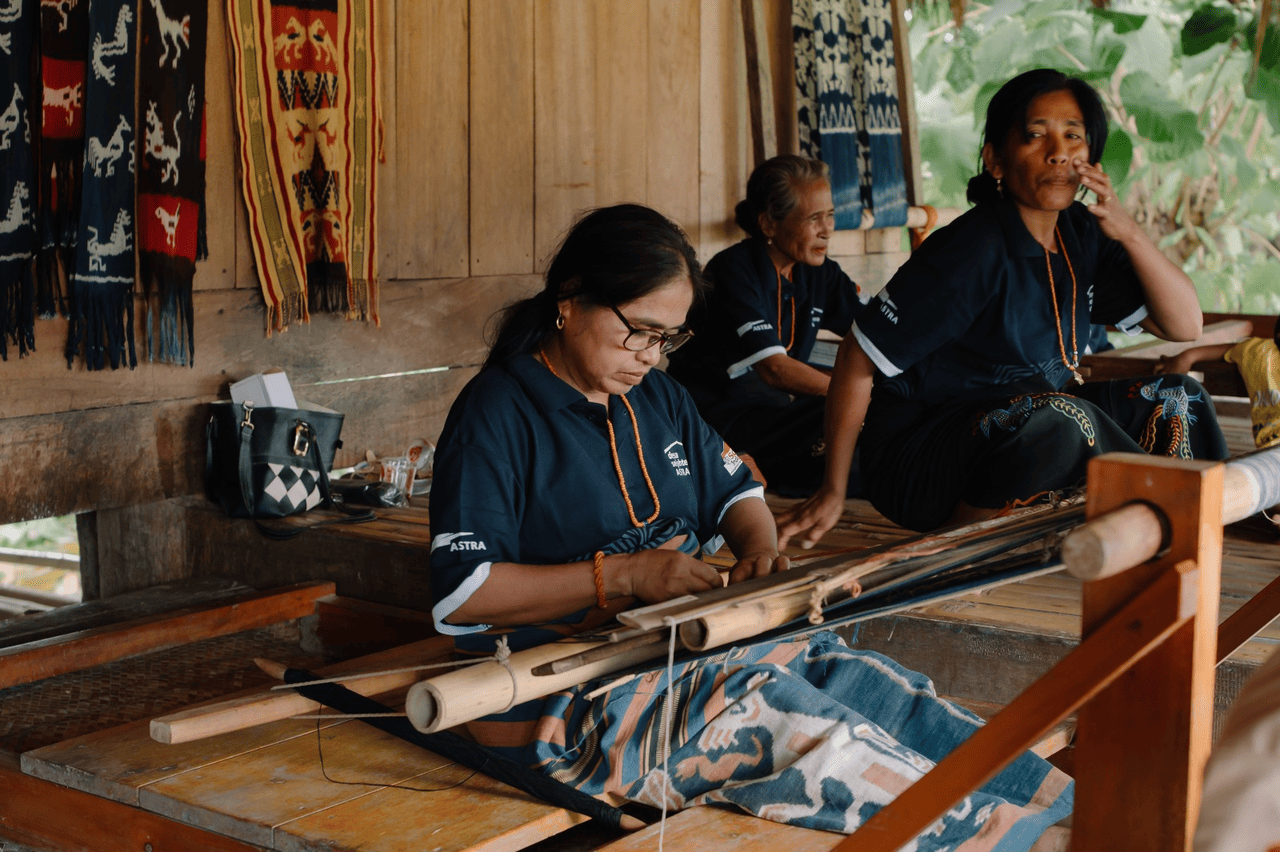
Traditional villages preserve local wisdom and support sustainable development through natural resource management, cultural heritage, and strong community values.
Others
6 mins read
0
Bagikan:
Indonesia is renowned for its rich cultural heritage, where many communities continue to preserve traditions, customs, and values passed down through generations.
One of the clearest examples of this cultural preservation can be found in its traditional villages, which remain an important part of community life today.
But what exactly is a traditional village, and what role does it play in sustainable development? Find out in this article.
ALSO READ: Tourism Village: Astra's Collaboration for Village Development
A traditional village is a legally recognized customary community with a defined territory and the authority to govern its own affairs, manage community interests, and preserve ancestral rights based on customary laws and local traditions.
In Indonesia, the legal recognition of traditional villages is established under Law No. 6 of 2014 on Villages. This law distinguishes between two types of villages: administrative and traditional. Traditional villages are granted broader authority to manage internal affairs in accordance with customary law, including communal land management, dispute resolution, and the preservation of cultural and religious traditions.
Unlike administrative villages, which follow the national government structure, traditional villages have their own leadership systems. They are typically led by respected customary leaders or community elders. In Bali, for example, the head of a traditional village is known as a Bendesa Adat, while in other regions the title may be tribal chief, customary leader, or clan head.
What truly distinguishes a traditional village is not merely its governance structure, but the shared values that bind the community together through customary law, cultural traditions, and local wisdom passed down across generations.
Conceptually, the terms traditional village and customary settlement often refer to communities that maintain customary laws and cultural traditions. The main difference lies in regional terminology.
The term customary settlement is more commonly used outside Java, particularly in Papua, Kalimantan, and Sulawesi.
Here are the key distinctions:
In the tourism sector, however, both terms are often used interchangeably to describe community-based cultural tourism destinations.
Understanding traditional villages means understanding the values that shape them. Below are some of their defining characteristics.
Traditional villages are governed by customary law, a set of norms and traditions that may not be formally written but are widely recognized, respected, and enforced within the community.
Disputes are generally resolved through customary deliberation rather than formal courts.
Each traditional village is led by a customary leader, such as a Bendesa Adat in Bali or other locally recognized leaders in other parts of Indonesia.
Traditional villages also maintain customary territories that include not only residential areas but also lands with cultural and spiritual significance.
One of the foundations of traditional villages is communal customary land, known in Indonesia as tanah ulayat. This land is collectively owned and managed by the community.
Because its use is governed by customary law, communal land cannot be freely bought or sold and is managed for the benefit of the entire community.
Life in traditional villages is closely connected to ceremonies marking important life events, including births, marriages, harvests, and funerals.
These rituals serve not only as cultural traditions but also as a way to strengthen social bonds within the community.
Leadership in traditional villages is built on trust, experience, and knowledge of customary practices rather than formal political authority.
Customary leaders preserve cultural values, mediate conflicts, and represent the community in dealings with external parties.
Traditional villages throughout Indonesia possess extensive knowledge of local ecosystems, including medicinal plants, weather patterns, water management, and traditional farming methods.
This knowledge, passed down orally for generations, is increasingly recognized as valuable for modern environmental conservation and sustainable resource management.
Indonesia is home to countless traditional villages spread across the archipelago. The following are among the communities supported by PT Astra International Tbk.
Kemiren Village in Banyuwangi is home to the Osing people, the indigenous community of Banyuwangi, often referred to as The Sunrise of Java.
Known for its Gandrung dance, the Barong Ider Bumi ritual, and distinctive woven textiles, Kemiren remains a vibrant center of Osing culture.
Since 2020, Kemiren has been officially recognized as a tourist village. Its achievements have continued to grow, earning a place among Indonesia's Top 50 Tourism Villages in the 2024 Indonesian Tourism Village Awards.
The village is also one of the communities supported through PT Astra International Tbk's community development initiatives.
Located along Youtefa Bay in Jayapura, Papua, Enggros Traditional Village is home to an indigenous coastal community that has lived in the area for generations.
The community depends heavily on mangrove forests and marine ecosystems, while its traditional knowledge of coastal resource management represents a valuable cultural and environmental heritage.
Traditional villages contribute to sustainable development in several important ways.
Traditional villages represent an invaluable cultural heritage that helps preserve national identity while contributing to sustainable development.
Through values such as mutual cooperation, customary law, environmental stewardship, and local economic empowerment, these communities demonstrate that development is not measured solely by economic growth, but also by social and cultural sustainability.
By combining local wisdom with innovation, traditional villages can serve as inspiring models for inclusive and sustainable development.
To learn more about PT Astra International Tbk's commitment to sustainable development through community empowerment and local economic development initiatives, explore the Astra Sustainability Report.


Be part of our enthusiastic community that is interconnected in the vision of a sustainable future.