'%3e%3cpath%20fill-rule='evenodd'%20clip-rule='evenodd'%20d='M72.7386%2031.9427H70.5078V34.2699H73.5513L74.8841%2037.6969H78.3056L72.2835%2022.6738H70.4996V25.6665L72.7386%2031.9427ZM70.5078%2031.9427H68.2688L70.4265%2025.6745H70.4996V22.6818H68.7889L62.8359%2037.7049H66.038L67.3748%2034.2779H70.4996L70.5078%2031.9427Z'%20fill='%23005BAA'/%3e%3cpath%20fill-rule='evenodd'%20clip-rule='evenodd'%20d='M89.5501%2025.455C88.5675%2025.0218%2087.5025%2024.7977%2086.4253%2024.7975C85.385%2024.7975%2083.9872%2025.2319%2083.9872%2026.9095C83.9872%2029.4678%2090.7529%2028.372%2090.7529%2033.4766C90.7529%2036.7602%2088.071%2037.9995%2084.9502%2037.9995C83.3248%2037.9995%2082.569%2037.7803%2081.0046%2037.4177L81.3053%2034.7199C82.3888%2035.2638%2083.5831%2035.562%2084.7999%2035.5926C85.9905%2035.5926%2087.5508%2035.0068%2087.5508%2033.6998C87.5508%2030.7749%2080.7852%2032.0181%2080.7852%2026.9852C80.7852%2023.6299%2083.4671%2022.3906%2086.1408%2022.3906C87.4021%2022.395%2088.655%2022.5912%2089.8548%2022.9724L89.5501%2025.455Z'%20fill='%23005BAA'/%3e%3cpath%20fill-rule='evenodd'%20clip-rule='evenodd'%20d='M97.584%2025.0925H93.1914V22.6816H105.093V25.0925H100.709V37.7047H97.584V25.0925Z'%20fill='%23005BAA'/%3e%3cpath%20fill-rule='evenodd'%20clip-rule='evenodd'%20d='M113.344%2025.105C114.466%2025.2445%20115.429%2025.6829%20115.429%2026.9979C115.429%2028.4563%20114.466%2028.8947%20113.344%2029.0421V31.6682C113.795%2031.9551%20114.015%2032.3217%20114.315%2033.0549L116.176%2037.7172H119.598L117.139%2031.8794C116.847%2031.1461%20116.327%2030.3452%20115.514%2030.2854C116.384%2030.1857%20117.185%2029.7724%20117.762%2029.1258C118.339%2028.4793%20118.65%2027.6456%20118.635%2026.7867C118.635%2023.3597%20116.034%2022.8456%20113.352%2022.7021L113.344%2025.105ZM111.19%2025.105H113.344V22.7141H108.086V37.7372H111.207V31.5088H112.149C112.553%2031.4694%20112.96%2031.5198%20113.34%2031.6562V29.0302C112.946%2029.0878%20112.547%2029.1079%20112.149%2029.0899H111.186L111.19%2025.105Z'%20fill='%23005BAA'/%3e%3cpath%20fill-rule='evenodd'%20clip-rule='evenodd'%20d='M131.422%2031.9427H129.191V34.2699H132.32L133.584%2037.6969H137.001L130.979%2022.6738H129.191V25.6665L131.422%2031.9427ZM129.191%2031.9427H126.964L129.191%2025.6745V22.6818H127.484L121.531%2037.7049H124.75L126.082%2034.2779H129.207L129.191%2031.9427Z'%20fill='%23005BAA'/%3e%3cpath%20fill-rule='evenodd'%20clip-rule='evenodd'%20d='M80.9241%206.77433C77.1329%207.06523%2069.7658%208.15709%2063.7437%209.16527C57.7907%2010.1854%2054.8041%2010.9186%2052.2888%2011.5004C45.6694%2013.0346%2035.6285%2015.8838%2030.2729%2017.4778C25.5999%2019.0359%2013.1616%2024.0648%2012.7918%2023.9971C12.6415%2023.9971%2012.1904%2023.5587%2012.8609%2023.1204C11.6012%2023.9971%2031.0124%207.14492%2062.8416%202.91695V0H0V33.4732C19.334%2025.8182%2040.6104%2022.8255%2062.8457%2022.8255V14.7441L63.3699%2014.5967C76.0885%209.93037%2090.8918%208.02957%20114.911%205.55097V4.75399C112.904%204.75399%2098.0272%204.96917%2081.2207%206.79425L80.9241%206.77433Z'%20fill='%23005BAA'/%3e%3cpath%20fill-rule='evenodd'%20clip-rule='evenodd'%20d='M114.912%204.29948C103.641%203.56019%2092.3313%203.60946%2081.0676%204.44692C75.1959%204.88526%2068.9463%205.76194%2063.1477%206.71034C50.7947%208.82234%2040.5385%2011.3767%2040.5385%2011.3767C40.5385%2011.3767%2039.7908%2011.3767%2040.4613%2010.9423C41.5788%2010.2848%2050.6484%206.272%2063.1477%203.86512C65.8269%203.35506%2068.6523%202.91672%2071.6241%202.55011C72.0711%202.55011%2071.6241%202.04004%2071.6241%202.04004C68.7268%202.25921%2065.8255%202.40665%2063.0908%202.76928C51.3864%204.41589%2040.0139%207.83588%2029.3802%2012.9069C28.9332%2013.13%2030.5668%2012.1776%2021.046%2017.358C21.046%2017.358%2015.0971%2021.2233%2014.6542%2021.6617C14.0569%2022.2475%2019.5588%2019.8366%2023.4272%2018.4499C26.999%2017.2145%2036.6701%2014.5128%2038.9009%2013.8553C40.4613%2013.4209%2045.9633%2012.2613%2051.6887%2011.1575C57.0484%2010.0616%2062.1765%209.4121%2062.4772%209.34037H62.847C62.847%209.34037%2068.7268%208.45971%2069.9093%208.24054C71.7013%207.87393%2081.4455%206.71034%2081.5187%206.71034C98.3292%204.88526%20115.209%204.7418%20114.912%204.7418V4.29948Z'%20fill='%2395B6DF'/%3e%3c/g%3e%3cdefs%3e%3cclipPath%20id='clip0_118_10024'%3e%3crect%20width='137'%20height='38'%20fill='white'/%3e%3c/clipPath%3e%3c/defs%3e%3c/svg%3e)






Explore the history of automotive in Indonesia, from early vehicle introductions to the evolution of industry and technology.
Ekosistem EV
5 mins read
0
Bagikan:
To this day, the automotive industry in Indonesia continues to evolve, adapting to changing consumer needs and lifestyles.
This development is reflected not only in vehicle design and performance but also in engine technology, safety systems, and the shift toward more eco-friendly mobility solutions.
In this article, we'll take a closer look at how this evolution began, from the colonial era, through the rise of family cars, to today's transition toward a low-carbon future.
ALSO READ: Classification of Hybrid Car Types in the Automotive Industry
The growth of Indonesia's automotive industry did not happen overnight. It has been shaped by a long process of technological advancement. Here's how it evolved.
The history of automotive in Indonesia dates back to before independence. In 1894, the first car arrived in the country, when transportation was still dominated by horse-drawn carriages.
This historic vehicle was owned by Pakubuwono X, the ruler of the Surakarta Sunanate. The car was a Benz Victoria Phaeton, created by Karl Benz in Germany.
Interestingly, Pakubuwono X ordered the car through John C. Potter, a car dealer and sugar factory manager in Probolinggo, East Java.
His interest in automotive technology didn't stop there. About 13 years later, he expanded his collection by importing a Britze Daimler, another German car with more advanced technology at the time.
Following the introduction of cars among the elite, Indonesia's automotive industry began to develop more significantly about two decades later.
In 1927, an American company, NV General Motors Java Handel Maatschappij (NVGMJHM), established an assembly plant in Tanjung Priok, Jakarta.
This made Indonesia one of the early hubs for vehicle assembly in Southeast Asia. However, operations were halted during the Japanese occupation in 1942.
After Indonesia gained independence, the automotive industry gradually recovered. By 1955, the Tanjung Priok plant resumed operations under local ownership.
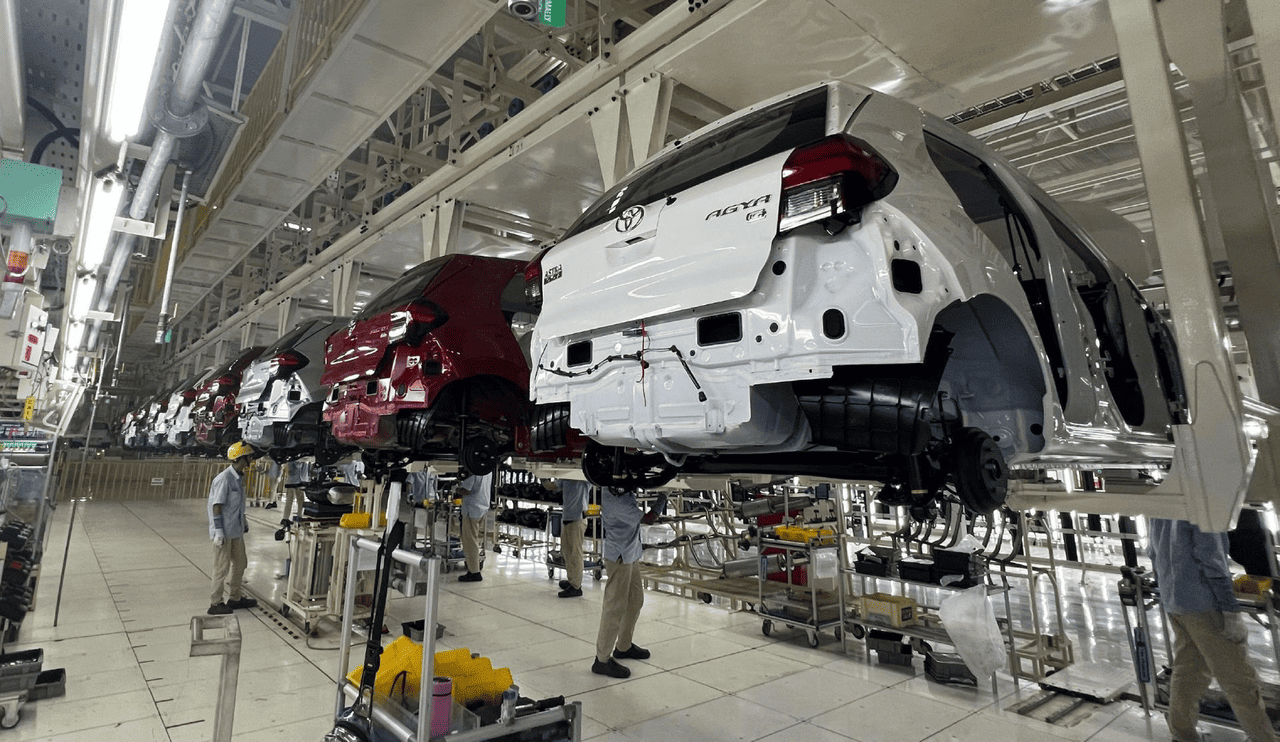
Entering the 1970s, the industry experienced rapid growth. The government opened the door to foreign investment, leading to the entry of Japanese manufacturers such as Toyota, Mitsubishi, and Honda.
This era also gave rise to the Sole Agent Brand Holder (ATPM) system, which is still used in Indonesia today.
ALSO READ: Understanding Indonesia's Automotive Industry: Challenges and Opportunities
The arrival of Japanese brands, especially Toyota, played a major role in popularizing MPVs (Multi-Purpose Vehicles) in Indonesia.
This trend began in the 1970s when the government introduced policies encouraging the production of affordable, versatile commercial vehicles under the KBNS (Basic Commercial Motor Vehicle) program.
In 1977, Toyota launched the Kijang as a pickup truck for goods transportation. However, as it was widely used to carry passengers, Toyota later introduced a passenger version, marking the beginning of the trend of seven-seater family cars in Indonesia.
The success of MPVs was followed by other manufacturers such as Mitsubishi (L300 and Kuda) and Isuzu (Panther). Since then, MPVs have remained one of the most popular vehicle types in the country.
As the automotive industry evolved, changes were not limited to vehicle design but also extended to engine technology and features.
One major milestone was the shift from carburetor systems to Electronic Fuel Injection (EFI), which improved fuel efficiency and engine performance.
Transmission technology has also advanced. While manual transmissions were once dominant, many vehicles now use automatic systems such as Continuously Variable Transmission (CVT) for improved comfort and efficiency.
Today, vehicles are also equipped with advanced safety technologies such as Advanced Driver Assistance Systems (ADAS), which include collision warnings, lane departure alerts, and adaptive cruise control.
Entering the 2020s, Indonesia's automotive industry has begun transitioning toward electric vehicles (EVs) to reduce carbon emissions and dependence on fossil fuels.
This shift is supported by government policies, including subsidies for electric motorcycles and tax incentives. In Jakarta, EV users also benefit from exemptions from the odd-even traffic restriction system.
Astra, as one of Indonesia's leading automotive groups, has responded with concrete actions.
Through subsidiaries such as Toyota Astra Motor, Astra Daihatsu Motor, and Isuzu Astra Motor Indonesia, Astra actively produces and markets eco-friendly vehicles.
This commitment is also reflected in the Astra Sustainability Report 2024, where Astra supports Indonesia's goal of achieving Net Zero Emissions by 2060. Its focus includes the development of electric vehicles (BEVs) and hybrids (HEVs), as well as hydrogen energy research.
To date, Astra has introduced 22 electrified vehicle models (xEV) in Indonesia, ranging from Hybrid Electric Vehicles (HEVs) to Battery Electric Vehicles (BEVs).
ALSO READ: Eco-Friendly Cars: Cleaner Transportation Innovation
The long journey of Indonesia's automotive industry demonstrates its adaptability to changing times and consumer needs.
Today, the industry is no longer focused solely on performance, but also on environmental responsibility.
The shift toward greener mobility reflects a strong commitment to creating a cleaner environment for future generations.
If you'd like to explore Astra's real contributions in more detail, you can learn about its automotive innovations in the Astra Sustainability Report. Through innovation and commitment, Astra continues to lead the way in delivering sustainable mobility solutions in Indonesia.


Be part of our enthusiastic community that is interconnected in the vision of a sustainable future.