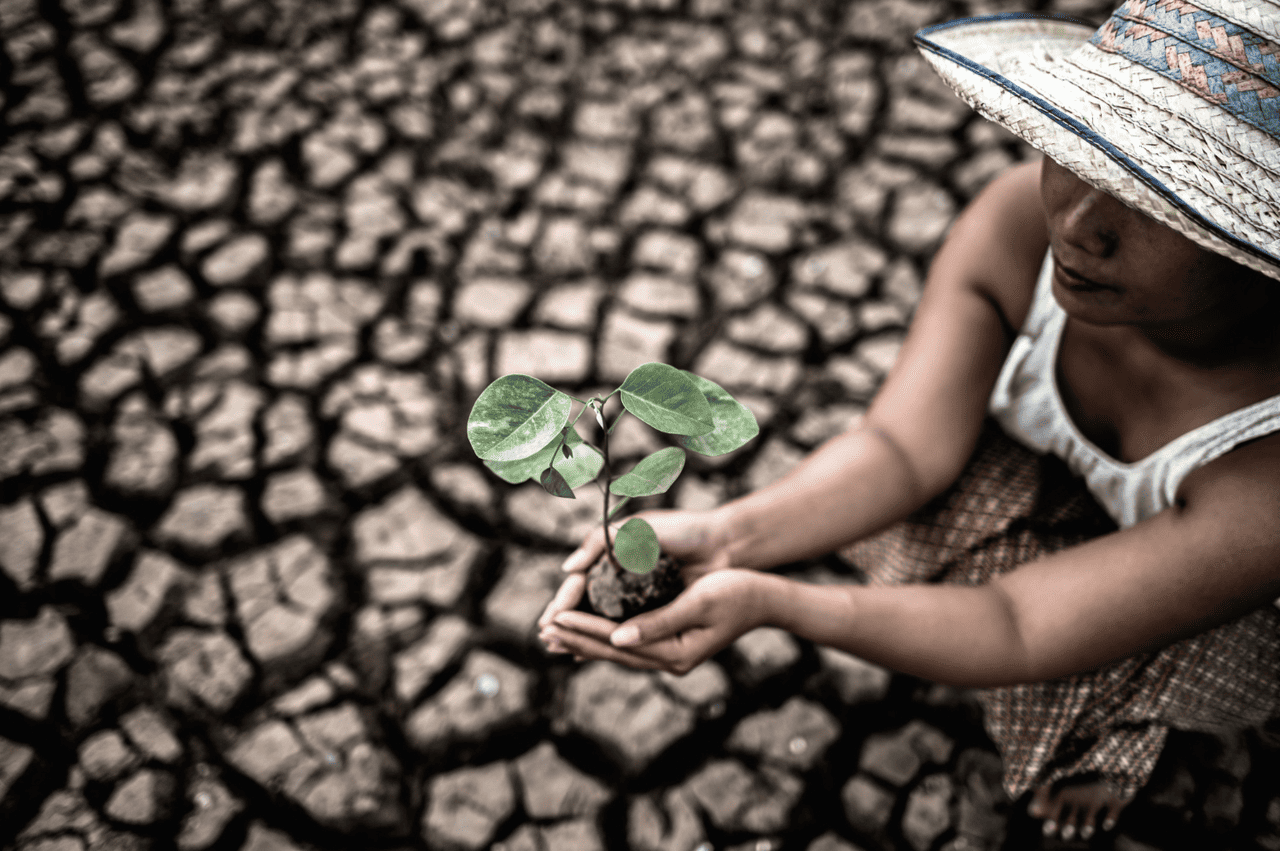
Climate change is now a reality that affects our daily lives. Rising global temperatures, unpredictable weather, and more frequent natural disasters are clear evidence. That is why climate change mitigation is essential.
These changes pose significant risks, such as supply chain disruptions and increased operational costs. In response, individuals must adapt and take concrete action.
So, what mitigation and adaptation measures can address climate change? This article provides a comprehensive overview.
ALSO READ: The Impact of Carbon Emission Reduction on Long-Term Business
What Is Climate Change Mitigation?
Climate change mitigation is an effort to reduce greenhouse gas (GHG) emissions, the primary cause of global warming. The goal is to slow or halt the effects of extreme climate change.
These efforts are essential to maintaining global temperature rise below 2°C, and preferably no more than 1.5°C above pre-industrial levels, consistent with the targets established by the 2015 Paris Agreement.
Climate change mitigation addresses the root causes of climate change, whereas adaptation emphasizes how individuals, cities, and businesses can adjust to and manage the impacts that have already occurred. These two approaches are complementary and should be implemented concurrently.
Causes of Climate Change
Although climate change arises from multiple factors, the primary driver is the increase in greenhouse gas emissions resulting from human activities, including:
- Fossil Fuel Combustion: Oil, natural gas, and coal used for energy, industry, and transportation are the largest contributors to carbon dioxide (CO₂) emissions.
- Deforestation: The large-scale removal of forests for agriculture, urban expansion, and commercial development diminishes ecosystems' capacity to absorb CO₂ through photosynthesis.
- Industrial Processes: Cement and steel production also generate significant amounts of greenhouse gas emissions.
- Intensive Agriculture and Livestock Farming: These activities generate methane (CH₄) and nitrous oxide (N₂O), both of which have significantly greater warming effects than CO₂.
- Waste and Land-Use Change: Landfills emit methane, and urbanization reduces the capacity for natural carbon sequestration
Why Is Climate Change Mitigation So Important?
Mitigation is important because climate change impacts extend beyond the environment, affecting social systems and economies. Without effective mitigation, risks will continue to increase, including:
- Extreme rises in global temperatures
- More frequent and severe natural disasters
- Disruptions to food and water security
- Serious threats to human health
- Long-term economic losses
Impacts of Climate Change
Climate change significantly affects human life and ecosystems worldwide. Its impacts include:
- Rising Global Temperatures: Increased frequency of extreme heat waves, melting polar ice, and higher nighttime temperatures.
- Sea Level Rise: Melting polar ice and glaciers threaten small islands and coastal areas.
- Changes in Rainfall Patterns: Result in droughts and extreme flooding in various regions.
- Food Crisis: Causes unstable food supplies and rising food prices.
ALSO READ: PAMA Site KIDE Launches the Biu Berseri ProKlim Program to Strengthen Environmental Resilience
Climate Change Mitigation and Adaptation Efforts That Can Be Implemented
As outlined above, climate change is a serious challenge that requires both reducing greenhouse gas emissions (mitigation) and adapting to its impacts (adaptation).
Below are examples of climate change mitigation and adaptation efforts.
1. Climate Change Mitigation Efforts
Mitigation efforts focus on reducing greenhouse gas emissions through renewable energy adoption, forest protection, and decreased fossil fuel use.
Examples of climate change mitigation efforts include:
- Switching to Renewable Energy: Using solar, wind, and hydropower to reduce carbon dioxide emissions from power plants.
- Energy Efficiency: Improving efficiency in households and industry, and using sustainable transportation to reduce energy use and carbon dioxide (CO₂) emissions.
- Reforestation and Forest Conservation: Protecting and restoring forests to increase natural carbon absorption.
- Sustainable Agriculture: Reducing fertilizer use and managing livestock waste to lower methane and nitrous oxide emissions.
- Climate Education and Awareness: Promoting public understanding of emission reduction and encouraging sustainable lifestyles.
2. Climate Change Adaptation Efforts
In addition to mitigation, reducing vulnerability to current climate change impacts is important. Examples of adaptation efforts include:
- Climate-Based Urban Planning: Designing resilient infrastructure, such as flood barriers, water-absorbing parks, and buildings that withstand higher temperatures.
- Adaptive Agricultural Practices: Using crop varieties that are more resistant to extreme temperatures and drought.
- Natural Disaster Protection: Enhancing early warning systems and emergency planning to protect communities from more frequent natural disasters.
- Development of Weather-Resilient Infrastructure: Building electricity, transportation, and water networks that can withstand extreme weather.
Benefits of Climate Change Mitigation and Adaptation
These efforts provide significant benefits for companies, communities, and the environment, including:
1. For Companies
- Long-term energy cost savings.
- Enhanced corporate reputation through environmentally responsible practices.
- Compliance with climate and emission regulations.
2. For Communities
- Cleaner air resulting from reduced carbon emissions.
- More disaster-resilient infrastructure.
- Creation of new green jobs in the renewable energy sector.
3. For the Environment
- Improved ecosystem preservation through environmental conservation.
- Significant reduction in global climate impacts.
- More sustainable natural resources as a result of reduced exploitation.
Simple Daily Habits to Support Climate Change Mitigation
Mitigating climate change does not always require major actions. It can begin with simple daily habits, such as:
- Saving electricity and water
- Reducing the use of private vehicles
- Using public transportation or low-emission vehicles
- Managing waste through the principles of reduce, reuse, and recycle
- Planting and caring for trees in your neighborhood
Consistent small steps can create a meaningful and lasting positive impact on the environment and our planet.
PT Astra International Tbk's Commitment to Climate Change Mitigation
As a national business group guided by the philosophy of "Prosper with the Nation," PT Astra International Tbk considers climate change mitigation an integral part of its sustainable business strategy.
Through the Astra 2030 Sustainability Aspirations, the Astra Group targets a 30% reduction in greenhouse gas emissions (Scopes 1 and 2), aligning with the government's objective of achieving net-zero emissions by 2060. PT Astra International Tbk has also established a long-term goal of achieving Net Zero for Scope 1 and 2 emissions by 2050.
The Astra Group has realized several measurable outcomes, including the following:
- Renewable energy now constitutes 44% of operational energy use, supported by biomass, solar panels, biofuels, and Renewable Energy Certificates (RECs/I-RECs).
- A biogas plant has been constructed to capture methane from palm oil mill effluent (POME), thereby preventing its release into the atmosphere.
- A biogas plant has been constructed to capture methane from palm oil mill effluent (POME), thereby preventing its release into the atmosphere.
- Operational equipment, including hybrid tower lamps and electric buses (EV Buses), has been electrified, enabling PT Pamapersada Nusantara to reduce emissions by up to 95,185 metric tons of CO₂-equivalent through a single energy-efficiency initiative.
- Carbon credits have been purchased through the Indonesia Carbon Exchange (IDXCarbon) as a supplementary measure to achieve emission reduction targets.
- An integrated energy efficiency program has been implemented through Astra Green Energy (AGEn), adhering to ISO 50001 (Energy Management System) and ISO 50002 (Energy Audit) standards.
This commitment demonstrates that climate change mitigation can be integrated with business growth that empowers communities. It reflects PT Astra International Tbk's ongoing commitment to sustainability across its diverse business sectors, including automotive, mining, and agribusiness.
ALSO READ: Suprabari Mapanindo Mineral Socializes ProKlim in Pendreh Village
Building a Better Planet Through Climate Change Mitigation and Adaptation
Climate change mitigation is both critical and urgent. By combining mitigation and adaptation, PT Astra International Tbk demonstrates leadership in building sustainable, resilient businesses.
For more information on PT Astra International Tbk's commitments to mitigation and adaptation, please refer to the Astra Sustainability Report.
You can also contribute by taking small steps, such as saving energy, reducing single-use plastics, and supporting climate-conscious companies.
'%3e%3cpath%20fill-rule='evenodd'%20clip-rule='evenodd'%20d='M72.7386%2031.9427H70.5078V34.2699H73.5513L74.8841%2037.6969H78.3056L72.2835%2022.6738H70.4996V25.6665L72.7386%2031.9427ZM70.5078%2031.9427H68.2688L70.4265%2025.6745H70.4996V22.6818H68.7889L62.8359%2037.7049H66.038L67.3748%2034.2779H70.4996L70.5078%2031.9427Z'%20fill='%23005BAA'/%3e%3cpath%20fill-rule='evenodd'%20clip-rule='evenodd'%20d='M89.5501%2025.455C88.5675%2025.0218%2087.5025%2024.7977%2086.4253%2024.7975C85.385%2024.7975%2083.9872%2025.2319%2083.9872%2026.9095C83.9872%2029.4678%2090.7529%2028.372%2090.7529%2033.4766C90.7529%2036.7602%2088.071%2037.9995%2084.9502%2037.9995C83.3248%2037.9995%2082.569%2037.7803%2081.0046%2037.4177L81.3053%2034.7199C82.3888%2035.2638%2083.5831%2035.562%2084.7999%2035.5926C85.9905%2035.5926%2087.5508%2035.0068%2087.5508%2033.6998C87.5508%2030.7749%2080.7852%2032.0181%2080.7852%2026.9852C80.7852%2023.6299%2083.4671%2022.3906%2086.1408%2022.3906C87.4021%2022.395%2088.655%2022.5912%2089.8548%2022.9724L89.5501%2025.455Z'%20fill='%23005BAA'/%3e%3cpath%20fill-rule='evenodd'%20clip-rule='evenodd'%20d='M97.584%2025.0925H93.1914V22.6816H105.093V25.0925H100.709V37.7047H97.584V25.0925Z'%20fill='%23005BAA'/%3e%3cpath%20fill-rule='evenodd'%20clip-rule='evenodd'%20d='M113.344%2025.105C114.466%2025.2445%20115.429%2025.6829%20115.429%2026.9979C115.429%2028.4563%20114.466%2028.8947%20113.344%2029.0421V31.6682C113.795%2031.9551%20114.015%2032.3217%20114.315%2033.0549L116.176%2037.7172H119.598L117.139%2031.8794C116.847%2031.1461%20116.327%2030.3452%20115.514%2030.2854C116.384%2030.1857%20117.185%2029.7724%20117.762%2029.1258C118.339%2028.4793%20118.65%2027.6456%20118.635%2026.7867C118.635%2023.3597%20116.034%2022.8456%20113.352%2022.7021L113.344%2025.105ZM111.19%2025.105H113.344V22.7141H108.086V37.7372H111.207V31.5088H112.149C112.553%2031.4694%20112.96%2031.5198%20113.34%2031.6562V29.0302C112.946%2029.0878%20112.547%2029.1079%20112.149%2029.0899H111.186L111.19%2025.105Z'%20fill='%23005BAA'/%3e%3cpath%20fill-rule='evenodd'%20clip-rule='evenodd'%20d='M131.422%2031.9427H129.191V34.2699H132.32L133.584%2037.6969H137.001L130.979%2022.6738H129.191V25.6665L131.422%2031.9427ZM129.191%2031.9427H126.964L129.191%2025.6745V22.6818H127.484L121.531%2037.7049H124.75L126.082%2034.2779H129.207L129.191%2031.9427Z'%20fill='%23005BAA'/%3e%3cpath%20fill-rule='evenodd'%20clip-rule='evenodd'%20d='M80.9241%206.77433C77.1329%207.06523%2069.7658%208.15709%2063.7437%209.16527C57.7907%2010.1854%2054.8041%2010.9186%2052.2888%2011.5004C45.6694%2013.0346%2035.6285%2015.8838%2030.2729%2017.4778C25.5999%2019.0359%2013.1616%2024.0648%2012.7918%2023.9971C12.6415%2023.9971%2012.1904%2023.5587%2012.8609%2023.1204C11.6012%2023.9971%2031.0124%207.14492%2062.8416%202.91695V0H0V33.4732C19.334%2025.8182%2040.6104%2022.8255%2062.8457%2022.8255V14.7441L63.3699%2014.5967C76.0885%209.93037%2090.8918%208.02957%20114.911%205.55097V4.75399C112.904%204.75399%2098.0272%204.96917%2081.2207%206.79425L80.9241%206.77433Z'%20fill='%23005BAA'/%3e%3cpath%20fill-rule='evenodd'%20clip-rule='evenodd'%20d='M114.912%204.29948C103.641%203.56019%2092.3313%203.60946%2081.0676%204.44692C75.1959%204.88526%2068.9463%205.76194%2063.1477%206.71034C50.7947%208.82234%2040.5385%2011.3767%2040.5385%2011.3767C40.5385%2011.3767%2039.7908%2011.3767%2040.4613%2010.9423C41.5788%2010.2848%2050.6484%206.272%2063.1477%203.86512C65.8269%203.35506%2068.6523%202.91672%2071.6241%202.55011C72.0711%202.55011%2071.6241%202.04004%2071.6241%202.04004C68.7268%202.25921%2065.8255%202.40665%2063.0908%202.76928C51.3864%204.41589%2040.0139%207.83588%2029.3802%2012.9069C28.9332%2013.13%2030.5668%2012.1776%2021.046%2017.358C21.046%2017.358%2015.0971%2021.2233%2014.6542%2021.6617C14.0569%2022.2475%2019.5588%2019.8366%2023.4272%2018.4499C26.999%2017.2145%2036.6701%2014.5128%2038.9009%2013.8553C40.4613%2013.4209%2045.9633%2012.2613%2051.6887%2011.1575C57.0484%2010.0616%2062.1765%209.4121%2062.4772%209.34037H62.847C62.847%209.34037%2068.7268%208.45971%2069.9093%208.24054C71.7013%207.87393%2081.4455%206.71034%2081.5187%206.71034C98.3292%204.88526%20115.209%204.7418%20114.912%204.7418V4.29948Z'%20fill='%2395B6DF'/%3e%3c/g%3e%3cdefs%3e%3cclipPath%20id='clip0_118_10024'%3e%3crect%20width='137'%20height='38'%20fill='white'/%3e%3c/clipPath%3e%3c/defs%3e%3c/svg%3e)