'%3e%3cpath%20fill-rule='evenodd'%20clip-rule='evenodd'%20d='M72.7386%2031.9427H70.5078V34.2699H73.5513L74.8841%2037.6969H78.3056L72.2835%2022.6738H70.4996V25.6665L72.7386%2031.9427ZM70.5078%2031.9427H68.2688L70.4265%2025.6745H70.4996V22.6818H68.7889L62.8359%2037.7049H66.038L67.3748%2034.2779H70.4996L70.5078%2031.9427Z'%20fill='%23005BAA'/%3e%3cpath%20fill-rule='evenodd'%20clip-rule='evenodd'%20d='M89.5501%2025.455C88.5675%2025.0218%2087.5025%2024.7977%2086.4253%2024.7975C85.385%2024.7975%2083.9872%2025.2319%2083.9872%2026.9095C83.9872%2029.4678%2090.7529%2028.372%2090.7529%2033.4766C90.7529%2036.7602%2088.071%2037.9995%2084.9502%2037.9995C83.3248%2037.9995%2082.569%2037.7803%2081.0046%2037.4177L81.3053%2034.7199C82.3888%2035.2638%2083.5831%2035.562%2084.7999%2035.5926C85.9905%2035.5926%2087.5508%2035.0068%2087.5508%2033.6998C87.5508%2030.7749%2080.7852%2032.0181%2080.7852%2026.9852C80.7852%2023.6299%2083.4671%2022.3906%2086.1408%2022.3906C87.4021%2022.395%2088.655%2022.5912%2089.8548%2022.9724L89.5501%2025.455Z'%20fill='%23005BAA'/%3e%3cpath%20fill-rule='evenodd'%20clip-rule='evenodd'%20d='M97.584%2025.0925H93.1914V22.6816H105.093V25.0925H100.709V37.7047H97.584V25.0925Z'%20fill='%23005BAA'/%3e%3cpath%20fill-rule='evenodd'%20clip-rule='evenodd'%20d='M113.344%2025.105C114.466%2025.2445%20115.429%2025.6829%20115.429%2026.9979C115.429%2028.4563%20114.466%2028.8947%20113.344%2029.0421V31.6682C113.795%2031.9551%20114.015%2032.3217%20114.315%2033.0549L116.176%2037.7172H119.598L117.139%2031.8794C116.847%2031.1461%20116.327%2030.3452%20115.514%2030.2854C116.384%2030.1857%20117.185%2029.7724%20117.762%2029.1258C118.339%2028.4793%20118.65%2027.6456%20118.635%2026.7867C118.635%2023.3597%20116.034%2022.8456%20113.352%2022.7021L113.344%2025.105ZM111.19%2025.105H113.344V22.7141H108.086V37.7372H111.207V31.5088H112.149C112.553%2031.4694%20112.96%2031.5198%20113.34%2031.6562V29.0302C112.946%2029.0878%20112.547%2029.1079%20112.149%2029.0899H111.186L111.19%2025.105Z'%20fill='%23005BAA'/%3e%3cpath%20fill-rule='evenodd'%20clip-rule='evenodd'%20d='M131.422%2031.9427H129.191V34.2699H132.32L133.584%2037.6969H137.001L130.979%2022.6738H129.191V25.6665L131.422%2031.9427ZM129.191%2031.9427H126.964L129.191%2025.6745V22.6818H127.484L121.531%2037.7049H124.75L126.082%2034.2779H129.207L129.191%2031.9427Z'%20fill='%23005BAA'/%3e%3cpath%20fill-rule='evenodd'%20clip-rule='evenodd'%20d='M80.9241%206.77433C77.1329%207.06523%2069.7658%208.15709%2063.7437%209.16527C57.7907%2010.1854%2054.8041%2010.9186%2052.2888%2011.5004C45.6694%2013.0346%2035.6285%2015.8838%2030.2729%2017.4778C25.5999%2019.0359%2013.1616%2024.0648%2012.7918%2023.9971C12.6415%2023.9971%2012.1904%2023.5587%2012.8609%2023.1204C11.6012%2023.9971%2031.0124%207.14492%2062.8416%202.91695V0H0V33.4732C19.334%2025.8182%2040.6104%2022.8255%2062.8457%2022.8255V14.7441L63.3699%2014.5967C76.0885%209.93037%2090.8918%208.02957%20114.911%205.55097V4.75399C112.904%204.75399%2098.0272%204.96917%2081.2207%206.79425L80.9241%206.77433Z'%20fill='%23005BAA'/%3e%3cpath%20fill-rule='evenodd'%20clip-rule='evenodd'%20d='M114.912%204.29948C103.641%203.56019%2092.3313%203.60946%2081.0676%204.44692C75.1959%204.88526%2068.9463%205.76194%2063.1477%206.71034C50.7947%208.82234%2040.5385%2011.3767%2040.5385%2011.3767C40.5385%2011.3767%2039.7908%2011.3767%2040.4613%2010.9423C41.5788%2010.2848%2050.6484%206.272%2063.1477%203.86512C65.8269%203.35506%2068.6523%202.91672%2071.6241%202.55011C72.0711%202.55011%2071.6241%202.04004%2071.6241%202.04004C68.7268%202.25921%2065.8255%202.40665%2063.0908%202.76928C51.3864%204.41589%2040.0139%207.83588%2029.3802%2012.9069C28.9332%2013.13%2030.5668%2012.1776%2021.046%2017.358C21.046%2017.358%2015.0971%2021.2233%2014.6542%2021.6617C14.0569%2022.2475%2019.5588%2019.8366%2023.4272%2018.4499C26.999%2017.2145%2036.6701%2014.5128%2038.9009%2013.8553C40.4613%2013.4209%2045.9633%2012.2613%2051.6887%2011.1575C57.0484%2010.0616%2062.1765%209.4121%2062.4772%209.34037H62.847C62.847%209.34037%2068.7268%208.45971%2069.9093%208.24054C71.7013%207.87393%2081.4455%206.71034%2081.5187%206.71034C98.3292%204.88526%20115.209%204.7418%20114.912%204.7418V4.29948Z'%20fill='%2395B6DF'/%3e%3c/g%3e%3cdefs%3e%3cclipPath%20id='clip0_118_10024'%3e%3crect%20width='137'%20height='38'%20fill='white'/%3e%3c/clipPath%3e%3c/defs%3e%3c/svg%3e)






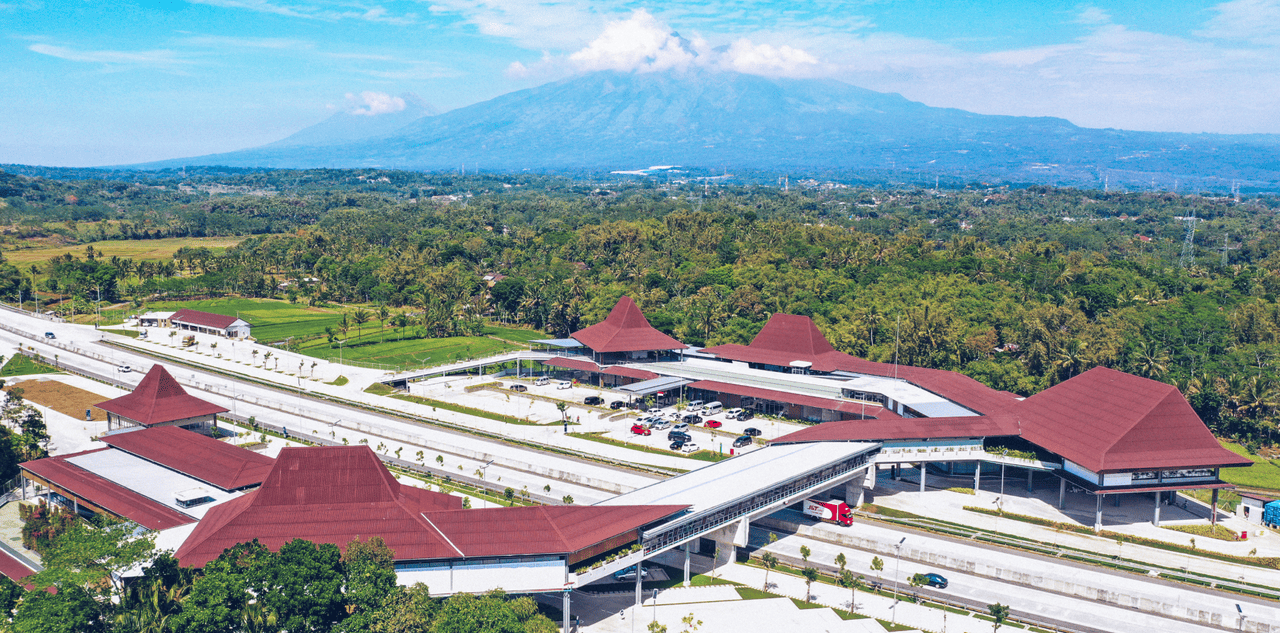
Sustainable infrastructure is the foundation of environmentally responsible, efficient, and long-term development with lasting economic and social impact.
Sustainability
7 mins read
0
Bagikan:
Amid climate change, rapid urbanization, and increasing development demands, sustainable infrastructure is receiving greater attention. Infrastructure now extends beyond the construction of roads, buildings, and public facilities.
It also involves ensuring development provides lasting benefits for the environment, society, and the economy. The private sector, including PT Astra International Tbk, plays a crucial role in promoting responsible development practices.
ALSO READ: Understanding Astra's Sustainability Framework Toward Long-Term Sustainability
Sustainable infrastructure provides enduring economic, social, and environmental benefits. Embracing this approach is essential to achieving global climate targets and advancing the Sustainable Development Goals (SDGs).
Beyond environmental objectives, sustainable infrastructure is vital for ongoing global economic growth. As the population grows, balancing economic, social, and environmental systems becomes more challenging. Infrastructure should be designed to ensure equal access to opportunities and services for all.
Sustainable infrastructure enables cities and communities to become more integrated, resilient, and better equipped to address climate change. It applies sustainability principles to the design and delivery of energy systems, roads, bridges, and other essential assets.
Traditional infrastructure development often results in high environmental costs. A sustainable approach transforms infrastructure from a problem to a part of the solution.
Key reasons to prioritize sustainable infrastructure include:
In practice, sustainable infrastructure focuses on four core dimensions.
Sustainable infrastructure should support long-term economic development and remain financially viable. This involves efficient use of resources and fostering innovation in job creation and technology.
From a social perspective, sustainable infrastructure promotes inclusion and equity. Everyone should have access to the infrastructure and basic services they need.
This includes creating local jobs, improving communities' quality of life, ensuring accessibility for people with disabilities, and incorporating community input into planning and decision-making.
Sustainable infrastructure aims to minimize environmental impact and conserve natural resources by reducing emissions, improving energy efficiency, managing waste responsibly, and protecting biodiversity.
Finally, sustainable infrastructure requires effective long-term management and operation. Strong governance, transparency, and accountability are essential.
ALSO READ: Understanding the Differences Between Sustainability, ESG, and CSR
To qualify as sustainable infrastructure, a project must adhere to several key principles:
Sustainable infrastructure requires careful consideration throughout the entire project lifecycle to maximize benefits and minimize environmental impact.
There are five main stages in building sustainable infrastructure:
The initial phase involves identifying community needs and conducting a feasibility study. This stage typically includes an environmental impact assessment (EIA), climate change risk analysis, community consultations, land-use planning, and life-cycle cost calculations.
Thorough planning helps minimize potential issues during construction.
After planning, the project moves to the design phase, where sustainability is integrated through energy-efficient layouts, natural lighting, efficient ventilation, low-carbon materials, water conservation, and green spaces.
The construction phase is critical for supporting sustainability. Common practices include:
These measures help reduce negative impacts on the environment and local communities.
After construction, infrastructure should be managed effectively to ensure long-term functionality. This includes monitoring energy use, conducting regular inspections, using digital monitoring systems, and performing preventive maintenance. Proper management extends infrastructure lifespan and reduces future repair costs.
The final stage is performance evaluation, which typically monitors energy efficiency, water use, carbon emissions, operating costs, and user satisfaction. These results inform improvements and innovations for future projects.
Implementing sustainable infrastructure offers a range of significant benefits:
Sustainable infrastructure is designed to minimize environmental harm. Developers should reduce emissions, protect ecosystems, and use resources efficiently.
Sustainable infrastructure delivers essential services such as sanitation, transportation, energy, and clean water. Ensuring universal access to these services directly improves community quality of life.
Implementing sustainable infrastructure is often more energy and resource-efficient, resulting in long-term cost savings, especially in maintenance.
In addition, infrastructure operators also benefit from environmental and renewable energy services.
Construction and ongoing operations create jobs across sectors, stimulating the local economy and diversifying its base.
Sustainable infrastructure is more resilient to natural disasters and extreme weather. Each asset is designed to withstand and recover from disruptions, reducing material losses and human impact.
Below are examples of sustainable infrastructure currently implemented in Indonesia.
Modern toll roads now feature eco-friendly drainage systems and energy-efficient operations. Through its infrastructure business, PT Astra International Tbk has integrated safety, environmental responsibility, and operational efficiency into its toll road management.
Green-certified buildings incorporate energy efficiency, effective waste management, and energy-saving cooling systems. Menara Astra exemplifies these principles through its energy-efficient design and use of renewable energy.
Developing solar energy facilities and clean electricity systems is essential to the national energy transition.
Digital technologies monitor energy consumption and infrastructure performance in real time, improving efficiency and transparency.
Nature-based infrastructure, such as PT Astra International Tbk's mangrove rehabilitation program, plays a key role in protecting coastlines and sequestering carbon.
PT Astra International Tbk places sustainability at the core of its long-term business strategy and has developed a comprehensive range of sustainable infrastructure practices based on an integrated approach.
PT Astra International Tbk emphasizes responsible environmental management, energy efficiency, and ongoing safety improvements in its infrastructure projects. These efforts include adopting eco-friendly technologies, implementing environmental management systems, and developing green buildings such as Menara Astra.
PT Astra International Tbk links its infrastructure development to broader social impact through community empowerment, education initiatives, and local economic development. This integrated approach ensures benefits extend beyond physical assets to improve community well-being.
ALSO READ: Environmental Sustainability: A Pillar of Astra's Sustainability Programs
Sustainable infrastructure is essential for Indonesia's future development. By integrating energy efficiency, environmental protection, and social benefits, infrastructure can drive inclusive and responsible growth.
The examples above show that development and environmental stewardship can coexist. PT Astra International Tbk's commitment, as detailed in the Astra Sustainability Report, demonstrates the business sector's strategic role in creating lasting positive impact.


Be part of our enthusiastic community that is interconnected in the vision of a sustainable future.