'%3e%3cpath%20fill-rule='evenodd'%20clip-rule='evenodd'%20d='M72.7386%2031.9427H70.5078V34.2699H73.5513L74.8841%2037.6969H78.3056L72.2835%2022.6738H70.4996V25.6665L72.7386%2031.9427ZM70.5078%2031.9427H68.2688L70.4265%2025.6745H70.4996V22.6818H68.7889L62.8359%2037.7049H66.038L67.3748%2034.2779H70.4996L70.5078%2031.9427Z'%20fill='%23005BAA'/%3e%3cpath%20fill-rule='evenodd'%20clip-rule='evenodd'%20d='M89.5501%2025.455C88.5675%2025.0218%2087.5025%2024.7977%2086.4253%2024.7975C85.385%2024.7975%2083.9872%2025.2319%2083.9872%2026.9095C83.9872%2029.4678%2090.7529%2028.372%2090.7529%2033.4766C90.7529%2036.7602%2088.071%2037.9995%2084.9502%2037.9995C83.3248%2037.9995%2082.569%2037.7803%2081.0046%2037.4177L81.3053%2034.7199C82.3888%2035.2638%2083.5831%2035.562%2084.7999%2035.5926C85.9905%2035.5926%2087.5508%2035.0068%2087.5508%2033.6998C87.5508%2030.7749%2080.7852%2032.0181%2080.7852%2026.9852C80.7852%2023.6299%2083.4671%2022.3906%2086.1408%2022.3906C87.4021%2022.395%2088.655%2022.5912%2089.8548%2022.9724L89.5501%2025.455Z'%20fill='%23005BAA'/%3e%3cpath%20fill-rule='evenodd'%20clip-rule='evenodd'%20d='M97.584%2025.0925H93.1914V22.6816H105.093V25.0925H100.709V37.7047H97.584V25.0925Z'%20fill='%23005BAA'/%3e%3cpath%20fill-rule='evenodd'%20clip-rule='evenodd'%20d='M113.344%2025.105C114.466%2025.2445%20115.429%2025.6829%20115.429%2026.9979C115.429%2028.4563%20114.466%2028.8947%20113.344%2029.0421V31.6682C113.795%2031.9551%20114.015%2032.3217%20114.315%2033.0549L116.176%2037.7172H119.598L117.139%2031.8794C116.847%2031.1461%20116.327%2030.3452%20115.514%2030.2854C116.384%2030.1857%20117.185%2029.7724%20117.762%2029.1258C118.339%2028.4793%20118.65%2027.6456%20118.635%2026.7867C118.635%2023.3597%20116.034%2022.8456%20113.352%2022.7021L113.344%2025.105ZM111.19%2025.105H113.344V22.7141H108.086V37.7372H111.207V31.5088H112.149C112.553%2031.4694%20112.96%2031.5198%20113.34%2031.6562V29.0302C112.946%2029.0878%20112.547%2029.1079%20112.149%2029.0899H111.186L111.19%2025.105Z'%20fill='%23005BAA'/%3e%3cpath%20fill-rule='evenodd'%20clip-rule='evenodd'%20d='M131.422%2031.9427H129.191V34.2699H132.32L133.584%2037.6969H137.001L130.979%2022.6738H129.191V25.6665L131.422%2031.9427ZM129.191%2031.9427H126.964L129.191%2025.6745V22.6818H127.484L121.531%2037.7049H124.75L126.082%2034.2779H129.207L129.191%2031.9427Z'%20fill='%23005BAA'/%3e%3cpath%20fill-rule='evenodd'%20clip-rule='evenodd'%20d='M80.9241%206.77433C77.1329%207.06523%2069.7658%208.15709%2063.7437%209.16527C57.7907%2010.1854%2054.8041%2010.9186%2052.2888%2011.5004C45.6694%2013.0346%2035.6285%2015.8838%2030.2729%2017.4778C25.5999%2019.0359%2013.1616%2024.0648%2012.7918%2023.9971C12.6415%2023.9971%2012.1904%2023.5587%2012.8609%2023.1204C11.6012%2023.9971%2031.0124%207.14492%2062.8416%202.91695V0H0V33.4732C19.334%2025.8182%2040.6104%2022.8255%2062.8457%2022.8255V14.7441L63.3699%2014.5967C76.0885%209.93037%2090.8918%208.02957%20114.911%205.55097V4.75399C112.904%204.75399%2098.0272%204.96917%2081.2207%206.79425L80.9241%206.77433Z'%20fill='%23005BAA'/%3e%3cpath%20fill-rule='evenodd'%20clip-rule='evenodd'%20d='M114.912%204.29948C103.641%203.56019%2092.3313%203.60946%2081.0676%204.44692C75.1959%204.88526%2068.9463%205.76194%2063.1477%206.71034C50.7947%208.82234%2040.5385%2011.3767%2040.5385%2011.3767C40.5385%2011.3767%2039.7908%2011.3767%2040.4613%2010.9423C41.5788%2010.2848%2050.6484%206.272%2063.1477%203.86512C65.8269%203.35506%2068.6523%202.91672%2071.6241%202.55011C72.0711%202.55011%2071.6241%202.04004%2071.6241%202.04004C68.7268%202.25921%2065.8255%202.40665%2063.0908%202.76928C51.3864%204.41589%2040.0139%207.83588%2029.3802%2012.9069C28.9332%2013.13%2030.5668%2012.1776%2021.046%2017.358C21.046%2017.358%2015.0971%2021.2233%2014.6542%2021.6617C14.0569%2022.2475%2019.5588%2019.8366%2023.4272%2018.4499C26.999%2017.2145%2036.6701%2014.5128%2038.9009%2013.8553C40.4613%2013.4209%2045.9633%2012.2613%2051.6887%2011.1575C57.0484%2010.0616%2062.1765%209.4121%2062.4772%209.34037H62.847C62.847%209.34037%2068.7268%208.45971%2069.9093%208.24054C71.7013%207.87393%2081.4455%206.71034%2081.5187%206.71034C98.3292%204.88526%20115.209%204.7418%20114.912%204.7418V4.29948Z'%20fill='%2395B6DF'/%3e%3c/g%3e%3cdefs%3e%3cclipPath%20id='clip0_118_10024'%3e%3crect%20width='137'%20height='38'%20fill='white'/%3e%3c/clipPath%3e%3c/defs%3e%3c/svg%3e)






Get a complete picture of what a village is, from its legal definition and governance structure to its potential in the modern era.
Kampung Berseri Astra dan Desa Sejahtera Astra
7 mins read
0
Bagikan:
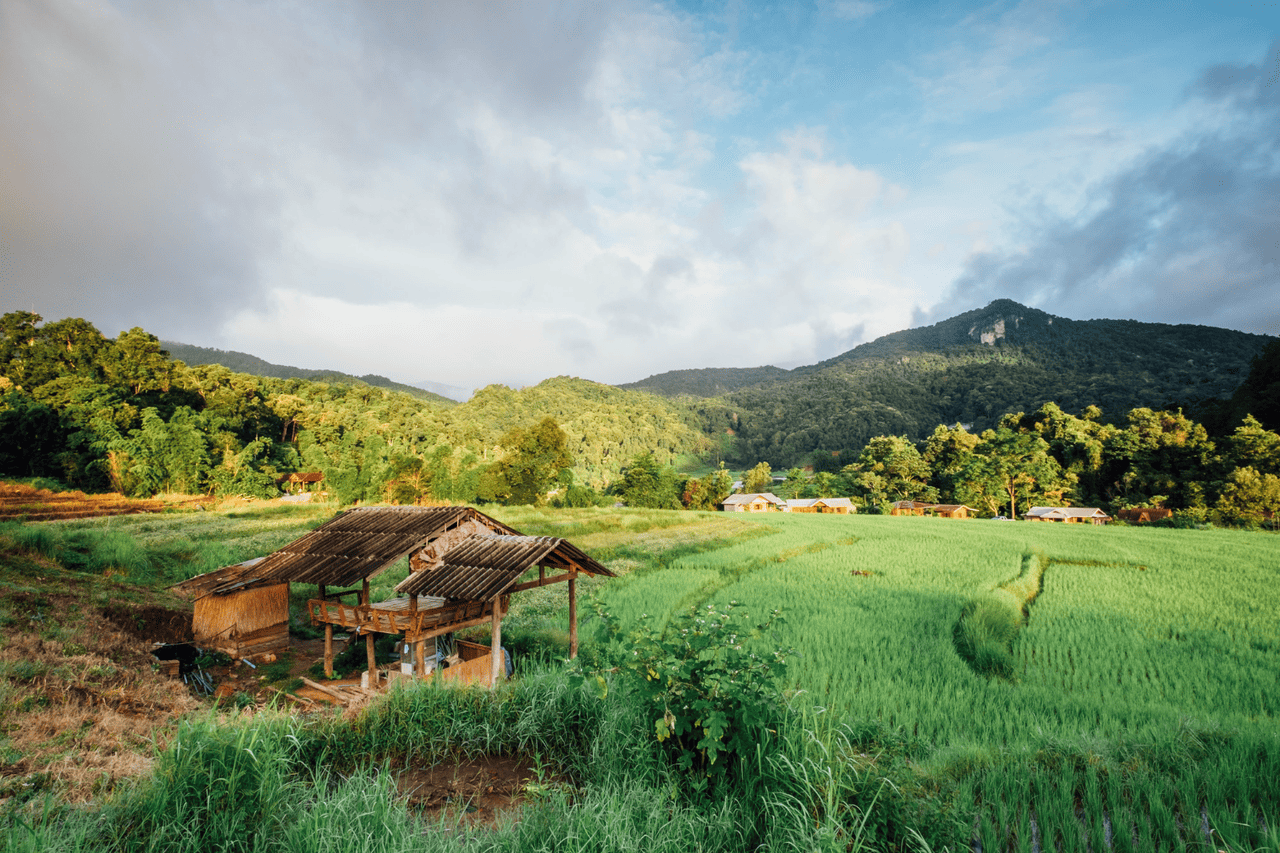
Indonesia is known as a nation of thousands of villages stretching from Sabang all the way to Merauke. A village is far more than a place where people live. It is also a vital part of national development, the local economy, and the preservation of culture. That is exactly why the question of what a village truly is feels more relevant than ever.
This is especially true now that Indonesia's development has begun to focus on spreading prosperity all the way out to rural areas. These days, villages are no longer seen as places left behind. Many are growing into new economic hubs through agriculture, tourism, small businesses, the creative economy, and digital transformation.
ALSO READ: Getting to Know the Independent Village, a Pillar of a Sustainable Society
Under Law Number 3 of 2024 on the Second Amendment to Law Number 6 of 2014 concerning Villages, a village is defined as a legal community unit with defined territorial boundaries, holding the authority to govern and manage its own administration and the interests of its local community based on community initiative, origin rights, and/or traditional rights recognized and respected within the governance system of the Unitary State of the Republic of Indonesia (NKRI).
A village has its own government, led by a village head and supported by village officials who handle administration and local development. In a social sense, a village is also closely tied to a tighter sense of community, a culture of mutual cooperation, local economic activity, and strong bonds among residents.
For these reasons, a village carries characteristics that set it clearly apart from an urban area.
Understanding what a village is would not be complete without knowing the sociological and geographic traits that distinguish it from a city. Here are several defining features that are firmly woven into a village's identity.
Village communities are generally held together by powerful ties of family, kinship, and shared history. Social interaction is not driven by financial profit and loss but by a spirit of togetherness.
This is what gives rise to the culture of mutual cooperation that remains so strong in villages, whether the task is building a home, working the rice fields, or carrying out traditional rituals.
The economic life of a village community still leans heavily on the surrounding natural environment. Most residents earn their living in agrarian sectors such as farming and plantations, along with fishing and livestock. When the weather turns harsh or the environment is damaged, the impact strikes directly at the lifeblood of the local economy.
In a village, religious norms, customary law, and traditions handed down by ancestors are still held firmly. Social control among residents works naturally through social sanctions or a sense of "sungkan," a deep reluctance to overstep. This is what keeps crime rates in rural areas generally far lower than in metropolitan ones.
Most village economic activity remains tied to the potential of the local area, such as farming, plantations, nature tourism, and local crafts. These varied strengths become the main engine of village development.
Compared with urban areas, a village generally has a lower population density and surroundings that stay closer to nature.
The final defining trait of a village is having its own system of government led by a village head. This village government is responsible for managing administration, development, and public services at the local level.
ALSO READ: Get to Know the Creative Village Program, Innovation for the Future of Its People
As explained in the definition, a village is a legal community unit with the authority to manage its own affairs. Because of this, a village has its own independent governance structure that still sits within the framework of NKRI. Here is the government structure in a village.
In general, villages serve several functions that are deeply important to Indonesia's development, including the following.
Through its Public Contribution Roadmap pillar, Astra has made village development a core strategy for achieving inclusive and evenly distributed economic growth. Here are Astra's concrete steps toward building prosperous villages.
Desa Sejahtera Astra is a flagship program in which Astra accompanies villages as they discover and make the most of their potential. By 2025, Astra had carried out intensive mentoring for more than 1,500 villages across Indonesia.
Astra does not simply hand over funding. It provides management training, helps raise product quality standards, and opens the widest possible access to markets. Beyond this, Astra carries out four additional pillars of initiative in rural areas, namely the following.
These four approaches treat rural development as an integrated whole, making it possible to nurture communities that are resilient and built to last.
Out of the thousands of villages it has guided, by 2025 Astra had successfully helped 492 Desa Sejahtera Astra (DSA) export their local products to countries around the world.
The total export value recorded by these rural communities reached a remarkable figure of IDR 411 billion. From coffee and spices to handcrafted goods, the products of Astra's supported villages are now recognized on the international stage.
ALSO READ: Unlocking Village Potential, Astra's Strategy to Drive Self-Reliance
In the end, the question of what a village is goes far beyond an administrative boundary. It is about community, local potential, culture, and the future of Indonesia's development.
Villages play a major role in safeguarding the economic, cultural, and social balance of Indonesian society. With the right support, they can also grow into new centers of growth that stand on their own and compete with confidence.
Through empowerment programs like Desa Sejahtera Astra, Astra shows how collaboration can help villages thrive sustainably without losing their local identity.
If you would like to look deeper into how Astra supports village development and sustainability in Indonesia, you can explore it firsthand through the Astra Sustainability Report. Who knows, the inspiration to change your own community might begin in a village.


Be part of our enthusiastic community that is interconnected in the vision of a sustainable future.