'%3e%3cpath%20fill-rule='evenodd'%20clip-rule='evenodd'%20d='M72.7386%2031.9427H70.5078V34.2699H73.5513L74.8841%2037.6969H78.3056L72.2835%2022.6738H70.4996V25.6665L72.7386%2031.9427ZM70.5078%2031.9427H68.2688L70.4265%2025.6745H70.4996V22.6818H68.7889L62.8359%2037.7049H66.038L67.3748%2034.2779H70.4996L70.5078%2031.9427Z'%20fill='%23005BAA'/%3e%3cpath%20fill-rule='evenodd'%20clip-rule='evenodd'%20d='M89.5501%2025.455C88.5675%2025.0218%2087.5025%2024.7977%2086.4253%2024.7975C85.385%2024.7975%2083.9872%2025.2319%2083.9872%2026.9095C83.9872%2029.4678%2090.7529%2028.372%2090.7529%2033.4766C90.7529%2036.7602%2088.071%2037.9995%2084.9502%2037.9995C83.3248%2037.9995%2082.569%2037.7803%2081.0046%2037.4177L81.3053%2034.7199C82.3888%2035.2638%2083.5831%2035.562%2084.7999%2035.5926C85.9905%2035.5926%2087.5508%2035.0068%2087.5508%2033.6998C87.5508%2030.7749%2080.7852%2032.0181%2080.7852%2026.9852C80.7852%2023.6299%2083.4671%2022.3906%2086.1408%2022.3906C87.4021%2022.395%2088.655%2022.5912%2089.8548%2022.9724L89.5501%2025.455Z'%20fill='%23005BAA'/%3e%3cpath%20fill-rule='evenodd'%20clip-rule='evenodd'%20d='M97.584%2025.0925H93.1914V22.6816H105.093V25.0925H100.709V37.7047H97.584V25.0925Z'%20fill='%23005BAA'/%3e%3cpath%20fill-rule='evenodd'%20clip-rule='evenodd'%20d='M113.344%2025.105C114.466%2025.2445%20115.429%2025.6829%20115.429%2026.9979C115.429%2028.4563%20114.466%2028.8947%20113.344%2029.0421V31.6682C113.795%2031.9551%20114.015%2032.3217%20114.315%2033.0549L116.176%2037.7172H119.598L117.139%2031.8794C116.847%2031.1461%20116.327%2030.3452%20115.514%2030.2854C116.384%2030.1857%20117.185%2029.7724%20117.762%2029.1258C118.339%2028.4793%20118.65%2027.6456%20118.635%2026.7867C118.635%2023.3597%20116.034%2022.8456%20113.352%2022.7021L113.344%2025.105ZM111.19%2025.105H113.344V22.7141H108.086V37.7372H111.207V31.5088H112.149C112.553%2031.4694%20112.96%2031.5198%20113.34%2031.6562V29.0302C112.946%2029.0878%20112.547%2029.1079%20112.149%2029.0899H111.186L111.19%2025.105Z'%20fill='%23005BAA'/%3e%3cpath%20fill-rule='evenodd'%20clip-rule='evenodd'%20d='M131.422%2031.9427H129.191V34.2699H132.32L133.584%2037.6969H137.001L130.979%2022.6738H129.191V25.6665L131.422%2031.9427ZM129.191%2031.9427H126.964L129.191%2025.6745V22.6818H127.484L121.531%2037.7049H124.75L126.082%2034.2779H129.207L129.191%2031.9427Z'%20fill='%23005BAA'/%3e%3cpath%20fill-rule='evenodd'%20clip-rule='evenodd'%20d='M80.9241%206.77433C77.1329%207.06523%2069.7658%208.15709%2063.7437%209.16527C57.7907%2010.1854%2054.8041%2010.9186%2052.2888%2011.5004C45.6694%2013.0346%2035.6285%2015.8838%2030.2729%2017.4778C25.5999%2019.0359%2013.1616%2024.0648%2012.7918%2023.9971C12.6415%2023.9971%2012.1904%2023.5587%2012.8609%2023.1204C11.6012%2023.9971%2031.0124%207.14492%2062.8416%202.91695V0H0V33.4732C19.334%2025.8182%2040.6104%2022.8255%2062.8457%2022.8255V14.7441L63.3699%2014.5967C76.0885%209.93037%2090.8918%208.02957%20114.911%205.55097V4.75399C112.904%204.75399%2098.0272%204.96917%2081.2207%206.79425L80.9241%206.77433Z'%20fill='%23005BAA'/%3e%3cpath%20fill-rule='evenodd'%20clip-rule='evenodd'%20d='M114.912%204.29948C103.641%203.56019%2092.3313%203.60946%2081.0676%204.44692C75.1959%204.88526%2068.9463%205.76194%2063.1477%206.71034C50.7947%208.82234%2040.5385%2011.3767%2040.5385%2011.3767C40.5385%2011.3767%2039.7908%2011.3767%2040.4613%2010.9423C41.5788%2010.2848%2050.6484%206.272%2063.1477%203.86512C65.8269%203.35506%2068.6523%202.91672%2071.6241%202.55011C72.0711%202.55011%2071.6241%202.04004%2071.6241%202.04004C68.7268%202.25921%2065.8255%202.40665%2063.0908%202.76928C51.3864%204.41589%2040.0139%207.83588%2029.3802%2012.9069C28.9332%2013.13%2030.5668%2012.1776%2021.046%2017.358C21.046%2017.358%2015.0971%2021.2233%2014.6542%2021.6617C14.0569%2022.2475%2019.5588%2019.8366%2023.4272%2018.4499C26.999%2017.2145%2036.6701%2014.5128%2038.9009%2013.8553C40.4613%2013.4209%2045.9633%2012.2613%2051.6887%2011.1575C57.0484%2010.0616%2062.1765%209.4121%2062.4772%209.34037H62.847C62.847%209.34037%2068.7268%208.45971%2069.9093%208.24054C71.7013%207.87393%2081.4455%206.71034%2081.5187%206.71034C98.3292%204.88526%20115.209%204.7418%20114.912%204.7418V4.29948Z'%20fill='%2395B6DF'/%3e%3c/g%3e%3cdefs%3e%3cclipPath%20id='clip0_118_10024'%3e%3crect%20width='137'%20height='38'%20fill='white'/%3e%3c/clipPath%3e%3c/defs%3e%3c/svg%3e)






Strategically developed local products create inclusive economic value and drive sustainable growth. Learn how villages are making it happen.
Public Contribution
6 mins read
0
Bagikan:
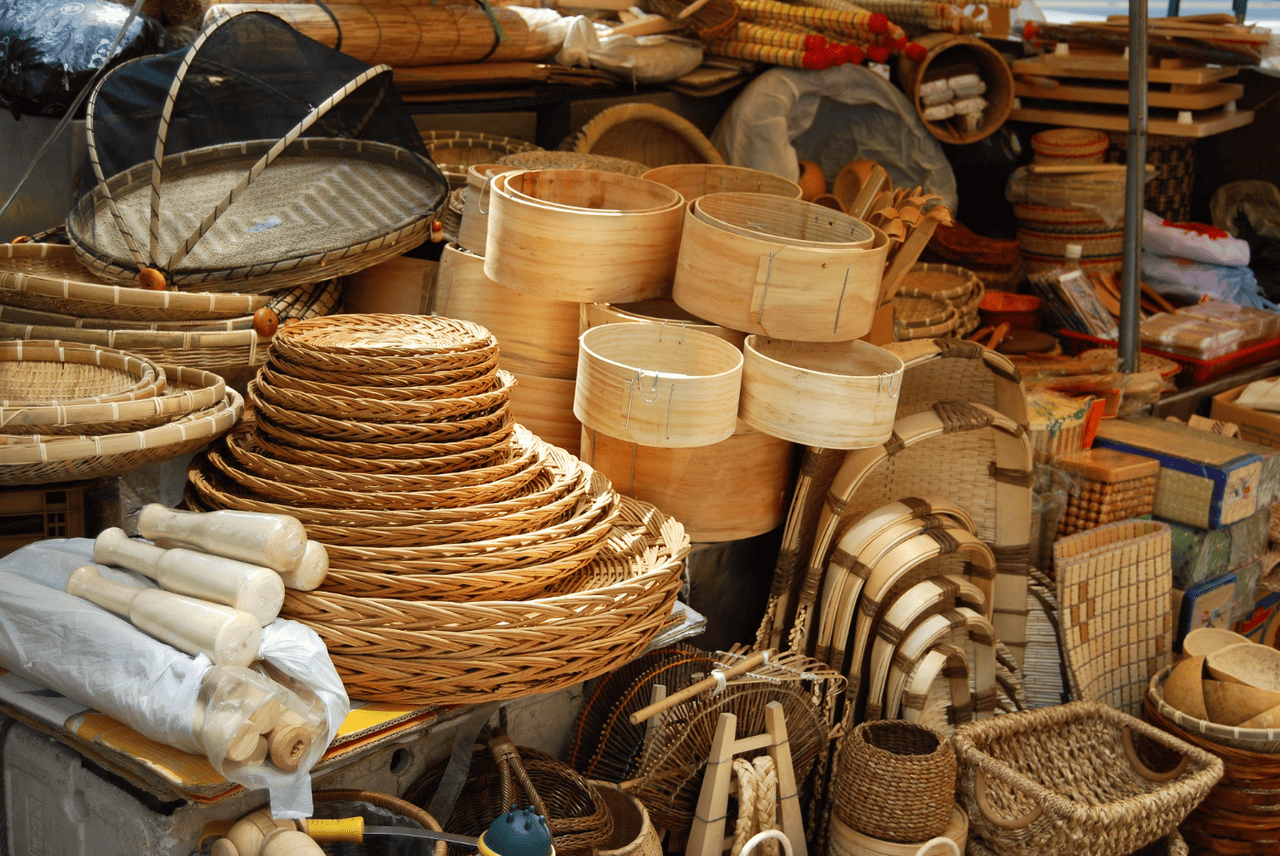
Every village in Indonesia has unique potential. When fully developed, local products go beyond regional identity by creating jobs, increasing community income, and strengthening village economic competitiveness.
However, developing competitive local products requires more than using available resources. A comprehensive strategy is needed, including quality improvement, innovation, entrepreneur capacity building, and expanded market access to increase product value.
ALSO READ: Astra's Village Development Program, Initiatives for Community Wellbeing
Local products are goods or services created by utilizing a region's resources, skills, or unique potential, providing economic, social, and cultural value to the community.
Local products are not only economic commodities but also part of a region's identity. The following points highlight why local advantages are important for village development.
Many villages sell agricultural, plantation, or fishery commodities as raw materials. Processing these commodities can significantly increase their market value.
For example, coconuts can be processed into crystallized coconut sugar or other products. This added value enables communities to earn higher incomes than by selling raw materials alone.
Developing local products includes not only production but also packaging, marketing, distribution, and business management.
As product development expands, job opportunities increase for local communities, including youth in villages.
When communities produce and market local products, the economic benefits extend to multiple stakeholders across the value chain. This collaboration builds a stronger and more inclusive economic ecosystem.
High-quality, distinctive products can define a region's identity and enhance its appeal. Signature products often boost recognition and drive growth in sectors like tourism, the creative economy, and investment.
Developing local products with consideration for environmental, social, and economic factors delivers long-term benefits.
By using resources responsibly, communities can sustain production, improve well-being, and preserve potential for future generations.
The success of a local product depends on both natural resources and the community's ability to manage, develop, and market it.
Villages can use the following strategies to develop their signature products.
The first step is to identify a village's potential, including natural resources, community skills, local culture, and geographic conditions that offer competitive advantages.
Mapping helps villages identify products with the greatest growth potential based on market demand. Key aspects include flagship commodities, raw material availability, and market opportunities.
To compete in wider markets, local products must meet consistent quality standards. Improvements can be made through better production processes, higher-quality raw materials, and innovative design and packaging.
High-quality products build consumer trust and open access to modern retail channels and export markets.
Local product development relies on the skills of those managing it. Training in production techniques, business management, digital marketing, marketing strategy, and branding is essential.
Strengthening these areas enables village entrepreneurs to manage their businesses professionally and adapt to market changes.
Digitalization offers villages broader opportunities to market their local products. Technology can be used in the following ways:
Technology also keeps entrepreneurs informed about market trends, consumer preferences, and export opportunities.
Local product development is more effective when involving multiple stakeholders, such as local governments, universities, communities, support organizations, and investors.
Targeted partnerships provide villages with access to training, mentoring, financing, and wider marketing networks.
ALSO READ: What Is a Swakarya Village? Learn About Village Self-Reliance
Selling raw materials typically yields limited returns. Processed products with a strong identity usually command higher market prices.
Here are some strategies to boost the added value of local products.
The Desa Sejahtera Astra (DSA) program exemplifies local product development. This community empowerment initiative helps villages produce high-value products and access broader markets through collaboration with local governments, communities, and Astra business units.
As of 2025, the DSA program has reached 1,533 villages in 180 regencies. Of these, 492 villages have marketed products to 26 countries, totaling IDR 411 billion in exports.
The program has increased the average community income by 56.85% and created 3,731 new jobs.
This success shows that local product development depends on more than natural resources. Mentoring, capacity building, and market access are vital for sustainable economic impact.
Below are three examples of successful local products from villages supported by PT Astra International Tbk.
A notable example is the development of the Bajawa Coffee ecosystem in Flores, East Nusa Tenggara.
Through Desa Sejahtera Astra, Astra partnered with IPB University to strengthen coffee development in six villages through initiatives such as:
This mentorship enabled Bajawa Coffee to meet export standards. As a result, these premium arabica beans achieved their first export of 15 tons valued at USD 93,000 to Thailand and gained market access to Japan and Taiwan.
Another example is the development of crystallized coconut sugar in DSA Banyumas. The initiative began by strengthening the "Semedo Manise" cooperative, which developed the product and successfully exported it to 13 countries.
The DSA Banyumas program reached about 1,100 community members, increased local income by up to 60%, created 325 jobs, and achieved 100% product market absorption.
Batik Bantengan from DSA Bantengan is inspired by the traditional dance of Kota Batu and transformed into premium fashion, crafts, and souvenirs. This has made DSA Bantengan a center for the culture-based creative economy and women's empowerment.
The initiative involved 350 community members, increased income by up to 55%, and achieved 100% product market absorption.
ALSO READ: Village Innovation Program: Steps For Community Sustainability
Local products are key to driving village economic growth and fostering inclusive, sustainable development. PT Astra International Tbk aims to realize this potential through the Desa Sejahtera Astra program.
The increasing number of villages exporting products and creating new jobs demonstrates that structured community empowerment generates lasting economic and social impact.
This commitment supports PT Astra International Tbk's efforts to create shared value for communities, the environment, and business.
To learn more about PT Astra International Tbk's sustainability initiatives, read the Astra Sustainability Report, which details the company's community empowerment programs and contributions to sustainable development.


Be part of our enthusiastic community that is interconnected in the vision of a sustainable future.