'%3e%3cpath%20fill-rule='evenodd'%20clip-rule='evenodd'%20d='M72.7386%2031.9427H70.5078V34.2699H73.5513L74.8841%2037.6969H78.3056L72.2835%2022.6738H70.4996V25.6665L72.7386%2031.9427ZM70.5078%2031.9427H68.2688L70.4265%2025.6745H70.4996V22.6818H68.7889L62.8359%2037.7049H66.038L67.3748%2034.2779H70.4996L70.5078%2031.9427Z'%20fill='%23005BAA'/%3e%3cpath%20fill-rule='evenodd'%20clip-rule='evenodd'%20d='M89.5501%2025.455C88.5675%2025.0218%2087.5025%2024.7977%2086.4253%2024.7975C85.385%2024.7975%2083.9872%2025.2319%2083.9872%2026.9095C83.9872%2029.4678%2090.7529%2028.372%2090.7529%2033.4766C90.7529%2036.7602%2088.071%2037.9995%2084.9502%2037.9995C83.3248%2037.9995%2082.569%2037.7803%2081.0046%2037.4177L81.3053%2034.7199C82.3888%2035.2638%2083.5831%2035.562%2084.7999%2035.5926C85.9905%2035.5926%2087.5508%2035.0068%2087.5508%2033.6998C87.5508%2030.7749%2080.7852%2032.0181%2080.7852%2026.9852C80.7852%2023.6299%2083.4671%2022.3906%2086.1408%2022.3906C87.4021%2022.395%2088.655%2022.5912%2089.8548%2022.9724L89.5501%2025.455Z'%20fill='%23005BAA'/%3e%3cpath%20fill-rule='evenodd'%20clip-rule='evenodd'%20d='M97.584%2025.0925H93.1914V22.6816H105.093V25.0925H100.709V37.7047H97.584V25.0925Z'%20fill='%23005BAA'/%3e%3cpath%20fill-rule='evenodd'%20clip-rule='evenodd'%20d='M113.344%2025.105C114.466%2025.2445%20115.429%2025.6829%20115.429%2026.9979C115.429%2028.4563%20114.466%2028.8947%20113.344%2029.0421V31.6682C113.795%2031.9551%20114.015%2032.3217%20114.315%2033.0549L116.176%2037.7172H119.598L117.139%2031.8794C116.847%2031.1461%20116.327%2030.3452%20115.514%2030.2854C116.384%2030.1857%20117.185%2029.7724%20117.762%2029.1258C118.339%2028.4793%20118.65%2027.6456%20118.635%2026.7867C118.635%2023.3597%20116.034%2022.8456%20113.352%2022.7021L113.344%2025.105ZM111.19%2025.105H113.344V22.7141H108.086V37.7372H111.207V31.5088H112.149C112.553%2031.4694%20112.96%2031.5198%20113.34%2031.6562V29.0302C112.946%2029.0878%20112.547%2029.1079%20112.149%2029.0899H111.186L111.19%2025.105Z'%20fill='%23005BAA'/%3e%3cpath%20fill-rule='evenodd'%20clip-rule='evenodd'%20d='M131.422%2031.9427H129.191V34.2699H132.32L133.584%2037.6969H137.001L130.979%2022.6738H129.191V25.6665L131.422%2031.9427ZM129.191%2031.9427H126.964L129.191%2025.6745V22.6818H127.484L121.531%2037.7049H124.75L126.082%2034.2779H129.207L129.191%2031.9427Z'%20fill='%23005BAA'/%3e%3cpath%20fill-rule='evenodd'%20clip-rule='evenodd'%20d='M80.9241%206.77433C77.1329%207.06523%2069.7658%208.15709%2063.7437%209.16527C57.7907%2010.1854%2054.8041%2010.9186%2052.2888%2011.5004C45.6694%2013.0346%2035.6285%2015.8838%2030.2729%2017.4778C25.5999%2019.0359%2013.1616%2024.0648%2012.7918%2023.9971C12.6415%2023.9971%2012.1904%2023.5587%2012.8609%2023.1204C11.6012%2023.9971%2031.0124%207.14492%2062.8416%202.91695V0H0V33.4732C19.334%2025.8182%2040.6104%2022.8255%2062.8457%2022.8255V14.7441L63.3699%2014.5967C76.0885%209.93037%2090.8918%208.02957%20114.911%205.55097V4.75399C112.904%204.75399%2098.0272%204.96917%2081.2207%206.79425L80.9241%206.77433Z'%20fill='%23005BAA'/%3e%3cpath%20fill-rule='evenodd'%20clip-rule='evenodd'%20d='M114.912%204.29948C103.641%203.56019%2092.3313%203.60946%2081.0676%204.44692C75.1959%204.88526%2068.9463%205.76194%2063.1477%206.71034C50.7947%208.82234%2040.5385%2011.3767%2040.5385%2011.3767C40.5385%2011.3767%2039.7908%2011.3767%2040.4613%2010.9423C41.5788%2010.2848%2050.6484%206.272%2063.1477%203.86512C65.8269%203.35506%2068.6523%202.91672%2071.6241%202.55011C72.0711%202.55011%2071.6241%202.04004%2071.6241%202.04004C68.7268%202.25921%2065.8255%202.40665%2063.0908%202.76928C51.3864%204.41589%2040.0139%207.83588%2029.3802%2012.9069C28.9332%2013.13%2030.5668%2012.1776%2021.046%2017.358C21.046%2017.358%2015.0971%2021.2233%2014.6542%2021.6617C14.0569%2022.2475%2019.5588%2019.8366%2023.4272%2018.4499C26.999%2017.2145%2036.6701%2014.5128%2038.9009%2013.8553C40.4613%2013.4209%2045.9633%2012.2613%2051.6887%2011.1575C57.0484%2010.0616%2062.1765%209.4121%2062.4772%209.34037H62.847C62.847%209.34037%2068.7268%208.45971%2069.9093%208.24054C71.7013%207.87393%2081.4455%206.71034%2081.5187%206.71034C98.3292%204.88526%20115.209%204.7418%20114.912%204.7418V4.29948Z'%20fill='%2395B6DF'/%3e%3c/g%3e%3cdefs%3e%3cclipPath%20id='clip0_118_10024'%3e%3crect%20width='137'%20height='38'%20fill='white'/%3e%3c/clipPath%3e%3c/defs%3e%3c/svg%3e)






Find out how Village SDGs help improve the economy, education, environment, and overall well-being of communities.
Sustainability
7 mins read
0
Bagikan:
Sustainable development, environmental stewardship, and improving the quality of life are topics that more and more people are engaging with. Yet a question that often arises is: how are these concepts applied at the village level? Village SDGs exist precisely as a guide for development that is more purposeful, equitable, and sustainable.
This article explains what Village SDGs are and why they represent a concept that communities across Indonesia are increasingly adopting.
ALSO READ: Understanding Astra's Sustainability Framework Toward a Sustainable Future
The Sustainable Development Goals (SDGs) are a global commitment adopted by 193 UN member states in 2015. Their purpose is to end poverty, protect the planet, and ensure that all people enjoy peace and prosperity.
In Indonesia, the SDGs are not applied solely at the national level. They have been translated into the context of village development, giving rise to what is known as Village SDGs (SDGs Desa).
In essence, Village SDGs are an integrated effort to realize villages free from poverty and hunger, villages with equitable economic growth, villages that prioritize health, environmental awareness, and education, villages that are women-friendly, well-networked, and culturally responsive, all in the service of accelerating the achievement of the broader SDGs.
The Village SDGs serve as the sustainable development blueprint, incorporated into the priority programs for Village Fund utilization since 2021.
Through this program, villages are expected to become more inclusive, sustainable, and capable of meeting the challenges ahead in ways that are true to their own local character.
Here are the 18 goals of the Village SDGs development program in Indonesia.
Rainwater harvesting systems generally do not require complicated or expensive maintenance. However, you still need to perform maintenance to ensure the system continues to function properly over the long term.
Some routine maintenance tasks you should perform include cleaning the catchment area and drains, checking for leaks in the storage tank, and inspecting the filtration system.
This goal goes beyond eliminating hunger. It also highlights the importance of food sovereignty and sustainable agriculture, reflecting the aspiration for a village that can meet its own food needs and manage its resources with genuine independence.
Well-being and health are two sides of the same coin. Therefore, creating a healthy village ensures that every resident can lead a productive and fulfilling life.
A healthy and prosperous village is not just about health facilities. It is also about how village residents are aware of the importance of living a healthy life.
Education is the bridge that allows village children to reach their dreams and realize their potential. Through quality education, young generations are expected to compete in the global era while holding onto the local values that define who they are.
Women also play a central role in the dynamics of village life. They serve not only as guardians of tradition but also as agents of change.
By implementing gender mainstreaming, it is hoped that rural women will have equal opportunities in various aspects of life.
Clean water and sanitation are fundamental human rights. However, in rural areas, access to both remains a significant challenge.
Therefore, the Clean Water and Sanitation-Ready Village initiative underscores the importance of ensuring that every villager has the right to clean water and adequate sanitation facilities. In this way, these two aspects can contribute to a better quality of life.
Energy is at the heart of every development activity. By focusing on clean, renewable energy, villages are encouraged to tap into local resources, such as solar and wind power, to meet their energy needs without harming the environment.
Equitable economic growth is a cornerstone of inclusive development. Villages must become places where every individual, regardless of background, has an equal opportunity to grow and reach their potential.
Good infrastructure and relevant innovation form the foundation of sustainable development. This encompasses proper road conditions, healthcare and education facilities, and the adoption of technologies that make daily life easier for residents.
Economic and social inequality must be addressed to build a harmonious community. By upholding the principles of fairness and equality, villages are expected to become places where every resident feels valued and has an equal chance to thrive.
Decent housing is a right for every village resident. Through this goal, the aim is for every villager to live in a safe, comfortable, and conducive environment that supports a higher quality of life.
In today's era of mass consumption, villages are called upon to lead by example in adopting more environmentally conscious consumption and production practices. This benefits not only the environment but also supports long-term sustainable economic development.
Climate change is one of the greatest challenges facing the world today. In pursuit of this goal, villages are encouraged to become more adaptive and responsive to climate change by implementing sound mitigation and adaptation strategies.
The sea is an invaluable resource. Coastal villages, therefore, carry an added responsibility to protect marine ecosystems, a duty essential to the sustainability of both natural resources and community livelihoods.
The sustainability of land environments is equally vital. By focusing on conserving forests, flora, and fauna, villages are expected to maintain the balance of nature and foster a harmonious way of life.
Peace and justice are two essential pillars of the SDGs for village development. Through this goal, villages are expected to become safe spaces where every resident is treated fairly and equitably.
Partnerships among villages, government, the private sector, and civil society are crucial for realizing the SDGs at the village level. Through synergy and collaboration, the potential of villages can be more fully optimized to achieve inclusive and sustainable development.
In an era defined by rapid change, villages are called upon to be more adaptive. With dynamic institutions and an adaptive village culture, communities are expected to rise to the challenges of the times while preserving the cherished values passed down through generations.
More than 40% of Indonesia's population lives in villages, which means that village progress translates directly into national progress. Key benefits of implementing SDGs at the village level include:
ALSO READ: Community Development: Definition, Goals, and Benefits
Village SDGs represent one of the most tangible steps toward an Indonesia that is fairer, healthier, and more sustainable. That is why their implementation is vital for government bodies, private sector actors, and village communities alike.
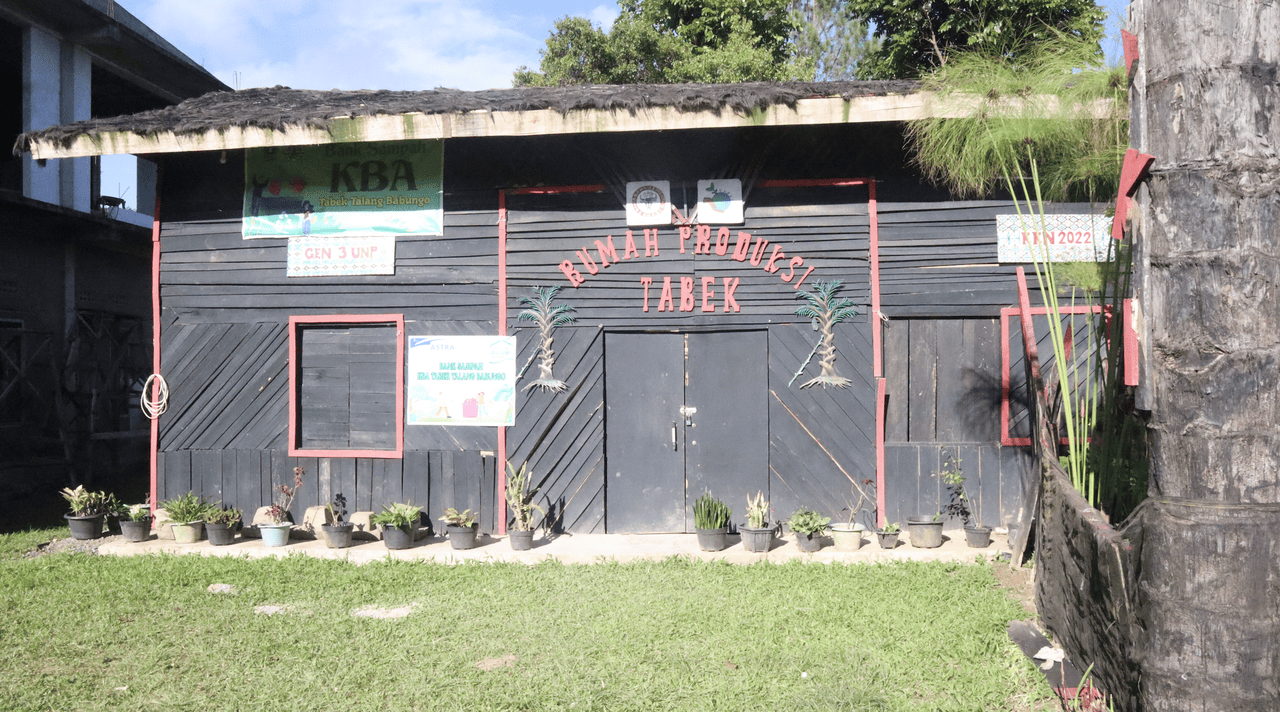
Through programs such as Desa Sejahtera Astra and Kampung Berseri Astra, the implementation of Village SDGs has become increasingly concrete, delivering broad and lasting impact for communities. To learn more about Astra's programs related to Village SDGs, visit the Astra Sustainability Report.


Be part of our enthusiastic community that is interconnected in the vision of a sustainable future.