'%3e%3cpath%20fill-rule='evenodd'%20clip-rule='evenodd'%20d='M72.7386%2031.9427H70.5078V34.2699H73.5513L74.8841%2037.6969H78.3056L72.2835%2022.6738H70.4996V25.6665L72.7386%2031.9427ZM70.5078%2031.9427H68.2688L70.4265%2025.6745H70.4996V22.6818H68.7889L62.8359%2037.7049H66.038L67.3748%2034.2779H70.4996L70.5078%2031.9427Z'%20fill='%23005BAA'/%3e%3cpath%20fill-rule='evenodd'%20clip-rule='evenodd'%20d='M89.5501%2025.455C88.5675%2025.0218%2087.5025%2024.7977%2086.4253%2024.7975C85.385%2024.7975%2083.9872%2025.2319%2083.9872%2026.9095C83.9872%2029.4678%2090.7529%2028.372%2090.7529%2033.4766C90.7529%2036.7602%2088.071%2037.9995%2084.9502%2037.9995C83.3248%2037.9995%2082.569%2037.7803%2081.0046%2037.4177L81.3053%2034.7199C82.3888%2035.2638%2083.5831%2035.562%2084.7999%2035.5926C85.9905%2035.5926%2087.5508%2035.0068%2087.5508%2033.6998C87.5508%2030.7749%2080.7852%2032.0181%2080.7852%2026.9852C80.7852%2023.6299%2083.4671%2022.3906%2086.1408%2022.3906C87.4021%2022.395%2088.655%2022.5912%2089.8548%2022.9724L89.5501%2025.455Z'%20fill='%23005BAA'/%3e%3cpath%20fill-rule='evenodd'%20clip-rule='evenodd'%20d='M97.584%2025.0925H93.1914V22.6816H105.093V25.0925H100.709V37.7047H97.584V25.0925Z'%20fill='%23005BAA'/%3e%3cpath%20fill-rule='evenodd'%20clip-rule='evenodd'%20d='M113.344%2025.105C114.466%2025.2445%20115.429%2025.6829%20115.429%2026.9979C115.429%2028.4563%20114.466%2028.8947%20113.344%2029.0421V31.6682C113.795%2031.9551%20114.015%2032.3217%20114.315%2033.0549L116.176%2037.7172H119.598L117.139%2031.8794C116.847%2031.1461%20116.327%2030.3452%20115.514%2030.2854C116.384%2030.1857%20117.185%2029.7724%20117.762%2029.1258C118.339%2028.4793%20118.65%2027.6456%20118.635%2026.7867C118.635%2023.3597%20116.034%2022.8456%20113.352%2022.7021L113.344%2025.105ZM111.19%2025.105H113.344V22.7141H108.086V37.7372H111.207V31.5088H112.149C112.553%2031.4694%20112.96%2031.5198%20113.34%2031.6562V29.0302C112.946%2029.0878%20112.547%2029.1079%20112.149%2029.0899H111.186L111.19%2025.105Z'%20fill='%23005BAA'/%3e%3cpath%20fill-rule='evenodd'%20clip-rule='evenodd'%20d='M131.422%2031.9427H129.191V34.2699H132.32L133.584%2037.6969H137.001L130.979%2022.6738H129.191V25.6665L131.422%2031.9427ZM129.191%2031.9427H126.964L129.191%2025.6745V22.6818H127.484L121.531%2037.7049H124.75L126.082%2034.2779H129.207L129.191%2031.9427Z'%20fill='%23005BAA'/%3e%3cpath%20fill-rule='evenodd'%20clip-rule='evenodd'%20d='M80.9241%206.77433C77.1329%207.06523%2069.7658%208.15709%2063.7437%209.16527C57.7907%2010.1854%2054.8041%2010.9186%2052.2888%2011.5004C45.6694%2013.0346%2035.6285%2015.8838%2030.2729%2017.4778C25.5999%2019.0359%2013.1616%2024.0648%2012.7918%2023.9971C12.6415%2023.9971%2012.1904%2023.5587%2012.8609%2023.1204C11.6012%2023.9971%2031.0124%207.14492%2062.8416%202.91695V0H0V33.4732C19.334%2025.8182%2040.6104%2022.8255%2062.8457%2022.8255V14.7441L63.3699%2014.5967C76.0885%209.93037%2090.8918%208.02957%20114.911%205.55097V4.75399C112.904%204.75399%2098.0272%204.96917%2081.2207%206.79425L80.9241%206.77433Z'%20fill='%23005BAA'/%3e%3cpath%20fill-rule='evenodd'%20clip-rule='evenodd'%20d='M114.912%204.29948C103.641%203.56019%2092.3313%203.60946%2081.0676%204.44692C75.1959%204.88526%2068.9463%205.76194%2063.1477%206.71034C50.7947%208.82234%2040.5385%2011.3767%2040.5385%2011.3767C40.5385%2011.3767%2039.7908%2011.3767%2040.4613%2010.9423C41.5788%2010.2848%2050.6484%206.272%2063.1477%203.86512C65.8269%203.35506%2068.6523%202.91672%2071.6241%202.55011C72.0711%202.55011%2071.6241%202.04004%2071.6241%202.04004C68.7268%202.25921%2065.8255%202.40665%2063.0908%202.76928C51.3864%204.41589%2040.0139%207.83588%2029.3802%2012.9069C28.9332%2013.13%2030.5668%2012.1776%2021.046%2017.358C21.046%2017.358%2015.0971%2021.2233%2014.6542%2021.6617C14.0569%2022.2475%2019.5588%2019.8366%2023.4272%2018.4499C26.999%2017.2145%2036.6701%2014.5128%2038.9009%2013.8553C40.4613%2013.4209%2045.9633%2012.2613%2051.6887%2011.1575C57.0484%2010.0616%2062.1765%209.4121%2062.4772%209.34037H62.847C62.847%209.34037%2068.7268%208.45971%2069.9093%208.24054C71.7013%207.87393%2081.4455%206.71034%2081.5187%206.71034C98.3292%204.88526%20115.209%204.7418%20114.912%204.7418V4.29948Z'%20fill='%2395B6DF'/%3e%3c/g%3e%3cdefs%3e%3cclipPath%20id='clip0_118_10024'%3e%3crect%20width='137'%20height='38'%20fill='white'/%3e%3c/clipPath%3e%3c/defs%3e%3c/svg%3e)






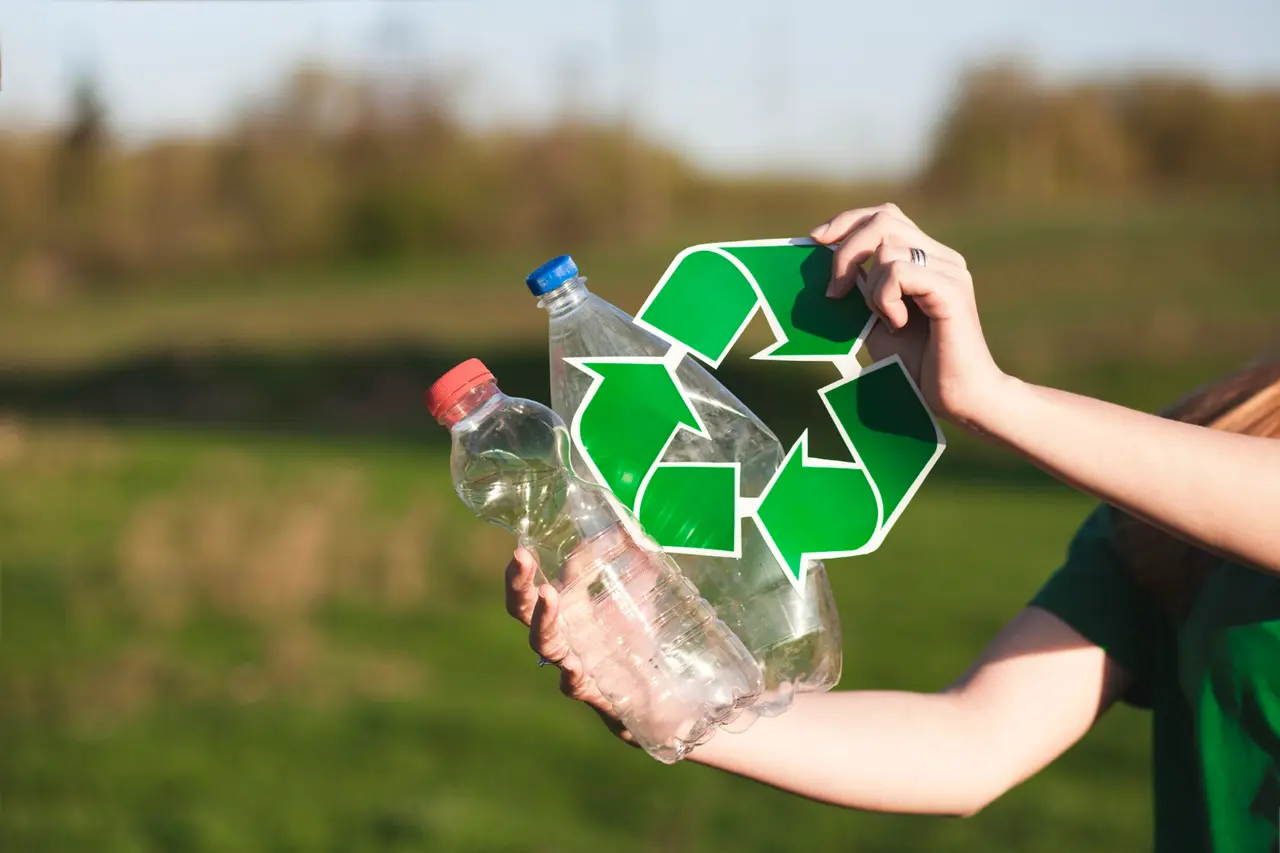
Recycling waste is the first step toward an environmentally friendly lifestyle. Let’s start with small actions that create a big impact!
Sustainability
6 mins read
0
Bagikan:
Waste is a global issue requiring urgent action. In Indonesia, waste generation continues to rise annually. Without proper management, the environmental and societal impact grows. This has prompted many to promote waste recycling campaigns.
Recycling is not only the government or industry’s job; it is everyone’s responsibility for a cleaner, more sustainable world. If you want to understand the recycling process, read on!
ALSO READ: Isuzu Donates Plastic Bottles Through a Supported Waste Bank Program
Waste recycling is the process of transforming waste or discarded materials into new materials that can be reused. This process aims to reduce the amount of waste sent to landfills and conserve limited natural resources.
Recyclable waste often comes from inorganic materials like plastic, metal, glass, and paper. Some organic waste, such as food scraps and dry leaves, can be composted as a form of natural recycling.
From this explanation, it can be seen that recycling is one of the pillars of the circular economy, encouraging the reuse of products and materials for as long as possible to reduce waste and environmental pollution.
Many people confuse the terms "recycle" and "upcycle" even though they involve different processes. Here are the differences.
1. Recycling is the process of breaking down or melting an original item, so it can be reshaped into a new item in a different form. For example, plastic bottles are melted and remolded into buckets or keychains.
2. Upcycling transforms an item into a new product with a different function without completely destroying its original form. For example, scrap fabric sewn into bags or accessories. Upcycled products generally have higher economic value than those produced through standard recycling.
Recycling benefits both the environment and socio-economic conditions. Here are some key benefits you should know.
The more waste that is recycled, the less waste must be disposed of in landfills. This helps extend the lifespan of landfills while reducing soil and water pollution.
Recycling reduces dependence on resources like wood, water, and minerals. For example, recycling paper reduces the need for logging trees.
Producing goods from recycled materials often uses less energy than making them from raw materials.
Recycling limits the need for waste burning or new material production, thus reducing carbon dioxide and other greenhouse gas emissions.
The recycling industry creates jobs, including roles in waste banks, collection, processing facilities, and the production of recycled goods. These benefit the community economy.
Recycling directly supports the Sustainable Development Goals (SDGs), particularly Goal 12 on responsible consumption and production.
Effective waste processing prevents pollution of soil, water, and air. As we know, uncontrolled waste accumulation in landfills and waste burning are major causes of pollution.
Through recycling, pollution generated from the production of new products can also be minimized.
ALSO READ: AHM Operates a Water Recycling System at the Deltamas Factory
You don’t need expertise to help. Here are simple waste recycling steps for the home or community.
First, separate organic, inorganic, and hazardous (B3) waste. This basic step enables effective recycling.
Next, clean inorganic waste, such as plastic, cans, or bottles, to prevent contamination of other recyclables.
Glass bottles, cardboard boxes, and thick plastic packaging can be reused as storage containers or crafts. They can even be transformed into products with economic value, such as flower vases or decorative accessories.
Many communities and cities offer waste-sorting facilities. You can drop off waste there, where management may offer points or cash as rewards.
Food scraps, fruit peels, and dry leaves can be composted into natural fertilizer for plants. Compost helps improve soil fertility, provides nutrients, and enhances soil structure. This is because compost contains macro nutrients such as nitrogen (N), phosphorus (P), and potassium (K), as well as micro nutrients essential for plant growth.
Buying recycled products also supports the sustainable circular process.
Have you often seen a small triangle with a number inside on plastic packaging? This symbol is the Resin Identification Code and indicates the type of plastic used. However, it does not guarantee the product will be recycled.
Several factors can prevent an item from being recycled, such as technological limitations in a region, damaged materials, or materials difficult to process. These are known as residual waste, like Styrofoam or multilayer plastic snack packaging.
Therefore, the safest approach is to start by sorting waste at the source and reducing the use of items that are difficult to recycle from the outset.
Recycling is not just a short-term solution because it is an important part of a greener future. By recycling, you contribute to:
Now it becomes clear that recycling is a small step with a big impact. You can start from home and inspire those around you to do the same.
Despite many benefits, recycling in Indonesia still faces challenges, such as:
1. What types of waste can be recycled?
Paper, plastic bottles, aluminum cans, glass, and metal can be recycled into valuable items.
2. Can all waste be recycled?
No. Some types of plastic and medical waste require special handling and cannot be recycled.
3. What simple steps can be taken to start recycling at home?
You can start by separating waste by type, cleaning recyclable materials, and sending them to the nearest waste bank.
ALSO READ: Best Work of AHM Best Student 2022: Recycling Waste to Produce Renewable Energy
Recycling waste is not complicated if you understand the proper methods. Besides helping reduce pollution, recycling also provides many benefits, ranging from environmental advantages to socio-economic impacts.
Through various initiatives and programs explained in its Sustainability Report, PT Astra International Tbk has become a real example of responsible waste management while supporting the circular economy. One of them is the implementation of the 6R concept (Refine, Reduce, Reuse, Recycle, Recovery, Retrieve to Energy) in solid waste management.
You can also take part in this change. Be part of the solution for a better Earth and future!


Be part of our enthusiastic community that is interconnected in the vision of a sustainable future.