'%3e%3cpath%20fill-rule='evenodd'%20clip-rule='evenodd'%20d='M72.7386%2031.9427H70.5078V34.2699H73.5513L74.8841%2037.6969H78.3056L72.2835%2022.6738H70.4996V25.6665L72.7386%2031.9427ZM70.5078%2031.9427H68.2688L70.4265%2025.6745H70.4996V22.6818H68.7889L62.8359%2037.7049H66.038L67.3748%2034.2779H70.4996L70.5078%2031.9427Z'%20fill='%23005BAA'/%3e%3cpath%20fill-rule='evenodd'%20clip-rule='evenodd'%20d='M89.5501%2025.455C88.5675%2025.0218%2087.5025%2024.7977%2086.4253%2024.7975C85.385%2024.7975%2083.9872%2025.2319%2083.9872%2026.9095C83.9872%2029.4678%2090.7529%2028.372%2090.7529%2033.4766C90.7529%2036.7602%2088.071%2037.9995%2084.9502%2037.9995C83.3248%2037.9995%2082.569%2037.7803%2081.0046%2037.4177L81.3053%2034.7199C82.3888%2035.2638%2083.5831%2035.562%2084.7999%2035.5926C85.9905%2035.5926%2087.5508%2035.0068%2087.5508%2033.6998C87.5508%2030.7749%2080.7852%2032.0181%2080.7852%2026.9852C80.7852%2023.6299%2083.4671%2022.3906%2086.1408%2022.3906C87.4021%2022.395%2088.655%2022.5912%2089.8548%2022.9724L89.5501%2025.455Z'%20fill='%23005BAA'/%3e%3cpath%20fill-rule='evenodd'%20clip-rule='evenodd'%20d='M97.584%2025.0925H93.1914V22.6816H105.093V25.0925H100.709V37.7047H97.584V25.0925Z'%20fill='%23005BAA'/%3e%3cpath%20fill-rule='evenodd'%20clip-rule='evenodd'%20d='M113.344%2025.105C114.466%2025.2445%20115.429%2025.6829%20115.429%2026.9979C115.429%2028.4563%20114.466%2028.8947%20113.344%2029.0421V31.6682C113.795%2031.9551%20114.015%2032.3217%20114.315%2033.0549L116.176%2037.7172H119.598L117.139%2031.8794C116.847%2031.1461%20116.327%2030.3452%20115.514%2030.2854C116.384%2030.1857%20117.185%2029.7724%20117.762%2029.1258C118.339%2028.4793%20118.65%2027.6456%20118.635%2026.7867C118.635%2023.3597%20116.034%2022.8456%20113.352%2022.7021L113.344%2025.105ZM111.19%2025.105H113.344V22.7141H108.086V37.7372H111.207V31.5088H112.149C112.553%2031.4694%20112.96%2031.5198%20113.34%2031.6562V29.0302C112.946%2029.0878%20112.547%2029.1079%20112.149%2029.0899H111.186L111.19%2025.105Z'%20fill='%23005BAA'/%3e%3cpath%20fill-rule='evenodd'%20clip-rule='evenodd'%20d='M131.422%2031.9427H129.191V34.2699H132.32L133.584%2037.6969H137.001L130.979%2022.6738H129.191V25.6665L131.422%2031.9427ZM129.191%2031.9427H126.964L129.191%2025.6745V22.6818H127.484L121.531%2037.7049H124.75L126.082%2034.2779H129.207L129.191%2031.9427Z'%20fill='%23005BAA'/%3e%3cpath%20fill-rule='evenodd'%20clip-rule='evenodd'%20d='M80.9241%206.77433C77.1329%207.06523%2069.7658%208.15709%2063.7437%209.16527C57.7907%2010.1854%2054.8041%2010.9186%2052.2888%2011.5004C45.6694%2013.0346%2035.6285%2015.8838%2030.2729%2017.4778C25.5999%2019.0359%2013.1616%2024.0648%2012.7918%2023.9971C12.6415%2023.9971%2012.1904%2023.5587%2012.8609%2023.1204C11.6012%2023.9971%2031.0124%207.14492%2062.8416%202.91695V0H0V33.4732C19.334%2025.8182%2040.6104%2022.8255%2062.8457%2022.8255V14.7441L63.3699%2014.5967C76.0885%209.93037%2090.8918%208.02957%20114.911%205.55097V4.75399C112.904%204.75399%2098.0272%204.96917%2081.2207%206.79425L80.9241%206.77433Z'%20fill='%23005BAA'/%3e%3cpath%20fill-rule='evenodd'%20clip-rule='evenodd'%20d='M114.912%204.29948C103.641%203.56019%2092.3313%203.60946%2081.0676%204.44692C75.1959%204.88526%2068.9463%205.76194%2063.1477%206.71034C50.7947%208.82234%2040.5385%2011.3767%2040.5385%2011.3767C40.5385%2011.3767%2039.7908%2011.3767%2040.4613%2010.9423C41.5788%2010.2848%2050.6484%206.272%2063.1477%203.86512C65.8269%203.35506%2068.6523%202.91672%2071.6241%202.55011C72.0711%202.55011%2071.6241%202.04004%2071.6241%202.04004C68.7268%202.25921%2065.8255%202.40665%2063.0908%202.76928C51.3864%204.41589%2040.0139%207.83588%2029.3802%2012.9069C28.9332%2013.13%2030.5668%2012.1776%2021.046%2017.358C21.046%2017.358%2015.0971%2021.2233%2014.6542%2021.6617C14.0569%2022.2475%2019.5588%2019.8366%2023.4272%2018.4499C26.999%2017.2145%2036.6701%2014.5128%2038.9009%2013.8553C40.4613%2013.4209%2045.9633%2012.2613%2051.6887%2011.1575C57.0484%2010.0616%2062.1765%209.4121%2062.4772%209.34037H62.847C62.847%209.34037%2068.7268%208.45971%2069.9093%208.24054C71.7013%207.87393%2081.4455%206.71034%2081.5187%206.71034C98.3292%204.88526%20115.209%204.7418%20114.912%204.7418V4.29948Z'%20fill='%2395B6DF'/%3e%3c/g%3e%3cdefs%3e%3cclipPath%20id='clip0_118_10024'%3e%3crect%20width='137'%20height='38'%20fill='white'/%3e%3c/clipPath%3e%3c/defs%3e%3c/svg%3e)







Learn what automotive really means, from its definition and the scope of the industry to the current trends shaping the modern business ecosystem.
Ekosistem EV
6 mins read
0
Bagikan:
The automotive industry is one of the sectors with a major influence on modern life. That is why the question of what automotive truly means feels increasingly relevant, especially amid the rise of electric vehicle technology and the transformation of the global industry.
In reality, though, the automotive world is about far more than cars and motorcycles. This industry spans a remarkably broad chain of business, reaching from manufacturing, distribution, and after-sales service to technology and environmental sustainability.
Want to know more about what automotive means? Find the full explanation in this article.
ALSO READ: Getting to Know Indonesia's Automotive Industry, Challenges and Opportunities
The term automotive comes from the word "autos," meaning self in Greek, and "motivus," meaning movement in Latin. Literally, then, automotive refers to anything capable of moving on its own.
In a more modern context, the term automotive can be understood as a system of motor vehicles such as motorcycles, cars, and trucks, which operate using engine power without the help of any outside force.
Once you know what automotive means, it is worth getting to know the history of the automotive world, which dates back to the 17th century and was marked by the invention of the steam engine.
A tremendous leap forward came when Carl Benz introduced the first vehicle powered by an internal combustion engine in 1887. It was this invention that ultimately became the foundation of the car as we know it today.
After that, a new breakthrough in the automotive industry arrived when Henry Ford launched the Model T in 1908. Beyond selling cars, Ford also changed the way cars were produced through a system of mass production. It was this approach that made cars far more affordable for the general public and opened a new era in modern transportation.
Since then, the automotive world has kept evolving in both design and technology, moving from manual to automatic transmissions and from fossil fuels to electric power. For this reason, automotive stands as one of the largest industrial sectors and one of the most influential, both economically and socially.
When discussing what automotive means, it is important to understand that this industry has a very wide reach.
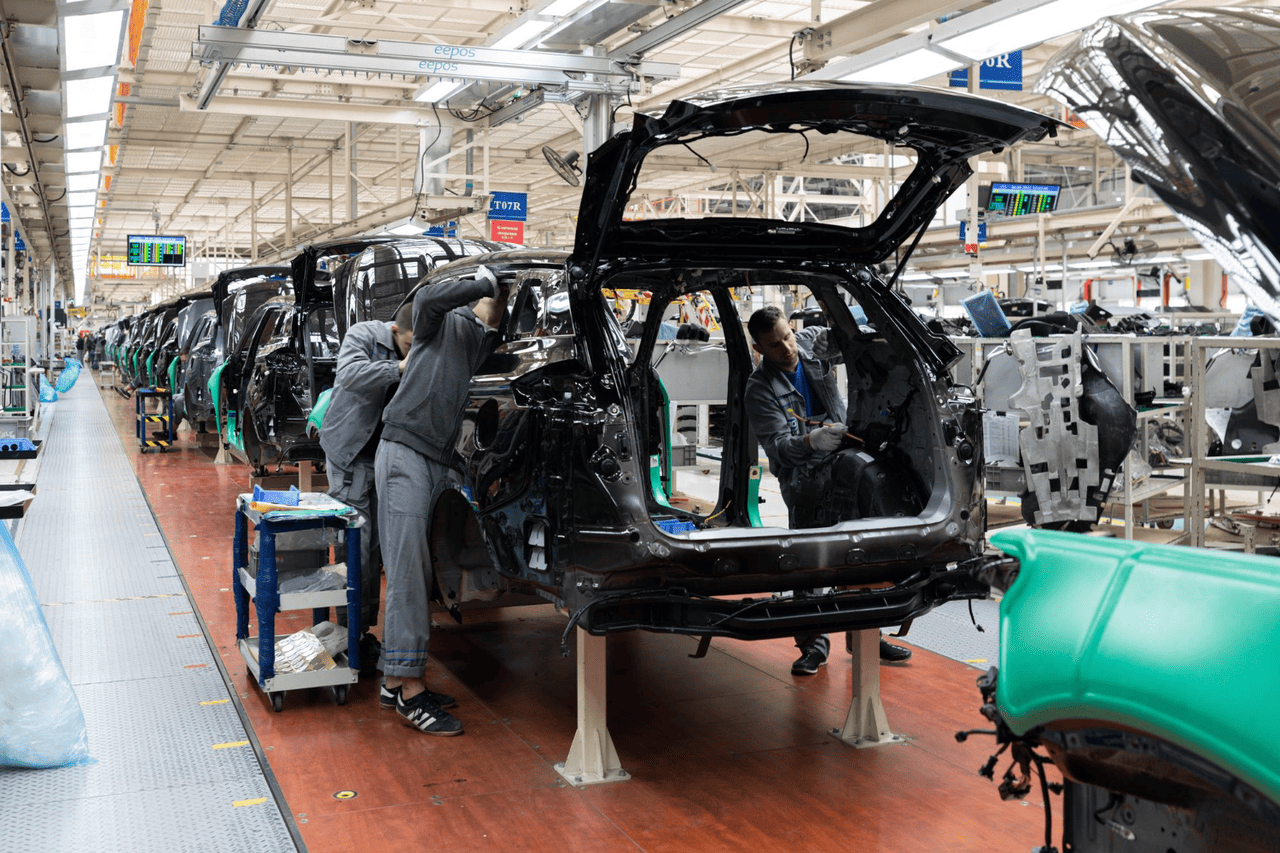
Manufacturing is the process of producing vehicles such as cars, motorcycles, trucks, buses, and electric vehicles. This stage involves product design, assembly, quality testing, and the distribution of vehicles to the market.
Indonesia itself is one of the largest automotive production bases in Southeast Asia, with a variety of global brands operating within the country. One example is the manufacturing business line of the Astra Group, which assembles and produces vehicles for renowned brands, such as PT Toyota Motor Manufacturing Indonesia and PT Astra Daihatsu Motor.
A vehicle is made up of thousands of components produced by a range of supporting companies. A few examples include tires, engines, braking systems, vehicle lights, suspension, batteries, and vehicle electronics. The components industry plays a vital role because it supports the automotive supply chain as a whole.
Here, Astra has a strong components business line through PT Astra Otoparts Tbk, which produces and distributes a variety of quality spare parts, such as GS Astra batteries and the range of components under the Aspira brand.
Once produced, vehicles are marketed through authorized dealers, showrooms, automotive marketplaces, and digital platforms. In the digital era, vehicle sales have also begun to integrate with online services and the digital customer experience.
One example of this is the distribution business line of the Astra Group, which operates a dealer network across Indonesia, such as Auto2000 for Toyota car sales, Astra Daihatsu, Astra Isuzu, BMW Astra, and Astra Motor for Honda two-wheeler retail.
The automotive industry does not stop once a vehicle is sold. After-sales service becomes an important part of the picture, covering vehicle servicing, periodic maintenance, spare part sales, body repair, and vehicle warranties. After-sales service is a key factor in maintaining customer loyalty.
As an example, Astra has a strong and reliable after-sales support ecosystem through its network of authorized workshops, such as AHASS (Astra Honda Authorized Service Station), along with the presence of Shop&Drive, which focuses on making light servicing and quick component replacement easy for its users.
Today, the advance of technology has become a core part of the modern automotive industry. Several innovations growing rapidly include the following.
This transformation keeps the automotive industry constantly changing to meet the needs of modern society.
For more than a century, the automotive industry relied on fossil fuels like gasoline and diesel. That paradigm, however, has now shifted dramatically. Global awareness of the climate crisis and the high level of greenhouse gas emissions has pushed the automotive industry to evolve.
Today, the future of automotive turns on three main pillars, including the following.
Even as it keeps growing, the automotive industry also faces a range of challenges.
Vehicle manufacturers must keep innovating to keep pace with the advance of technology. The shift toward electric vehicles, for instance, calls for major investment, infrastructure development, and market adaptation.
The automotive industry is becoming increasingly competitive with the arrival of new players, including electric vehicle makers from various countries.
Many countries are starting to apply stricter emissions regulations to reduce environmental impact. For this reason, automotive companies must be able to balance business growth, technological innovation, and sustainability.
ALSO READ: Hybrid Car Batteries, Their Function, How They Work, and How to Care for Them
In the end, what automotive means goes beyond cars or motorcycles. It is a vast industry connecting technology, mobility, the economy, and sustainability within a single modern ecosystem. The development of the automotive industry also shows how innovation keeps moving toward a future that is more efficient and more environmentally friendly.
Through the Astra Sustainability Report, Astra shows that the transformation of the automotive industry is not focused on business growth alone, but also on sustainability and a positive contribution to both society and the environment. If you would like to understand more deeply how Astra is developing its automotive business and sustainable mobility in Indonesia, you can explore that annual report.


Be part of our enthusiastic community that is interconnected in the vision of a sustainable future.